When I use the term the law of God here, I am not…
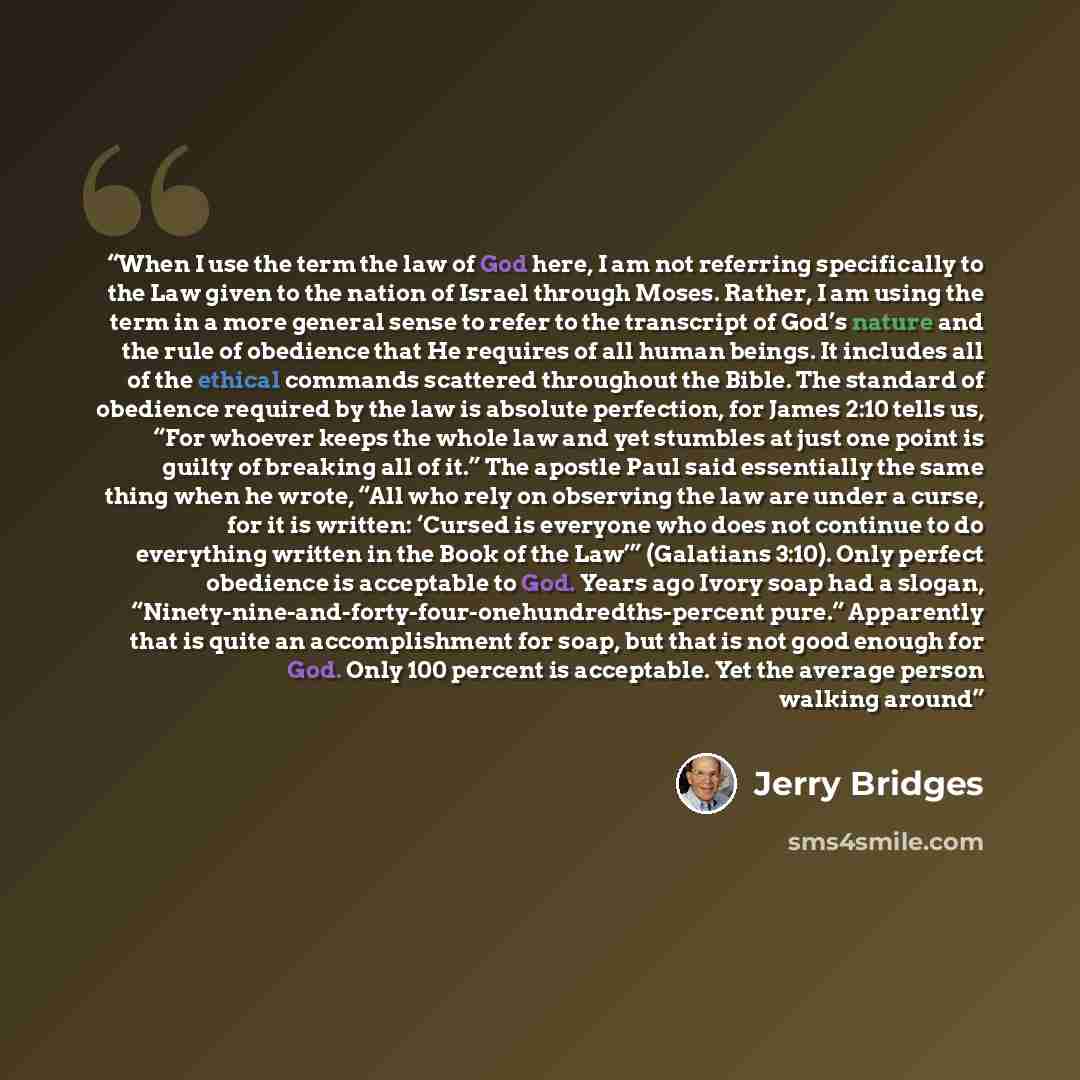
““When I use the term the law of God here, I am not referring specifically to the Law given to the nation of Israel through Moses. Rather, I am using the term in a more general sense to refer to the transcript of God’s nature and the rule of obedience that He requires of all human beings. It includes all of the ethical commands scattered throughout the Bible. The standard of obedience required by the law is absolute perfection, for James 2:10 tells us, “For whoever keeps the whole law and yet stumbles at just one point is guilty of breaking all of it.” The apostle Paul said essentially the same thing when he wrote, “All who rely on observing the law are under a curse, for it is written: ‘Cursed is everyone who does not continue to do everything written in the Book of the Law’” (Galatians 3:10). Only perfect obedience is acceptable to God. Years ago Ivory soap had a slogan, “Ninety-nine-and-forty-four-onehundredths-percent pure.” Apparently that is quite an accomplishment for soap, but that is not good enough for God. Only 100 percent is acceptable. Yet the average person walking around””
About This Quote
This interpretation was drafted with AI assistance. It is one reading of the quote, not the author's own explanation.
The divine moral law demands flawless obedience, a standard no human can meet, highlighting humanity’s dependence on grace.
In simple terms: God expects perfect obedience, which humans cannot achieve.
Key Takeaway
Rely on grace, not self‑righteousness.
Themes
sin
grace
law
humility
Mood
humble
serious
Type
theological
motivational
When to use this quote
- personal repentance
- teaching sermons
- ethical decision‑making
- spiritual counseling
Key Concepts
theology
ethical perfection
Questions to Reflect On
- What does it mean to live under a law we cannot fully obey?
- How can grace transform our approach to moral standards?
A Different Perspective
Human imperfection makes the law unattainable without divine assistance.