When we think of a criminal, we imagine someone with…
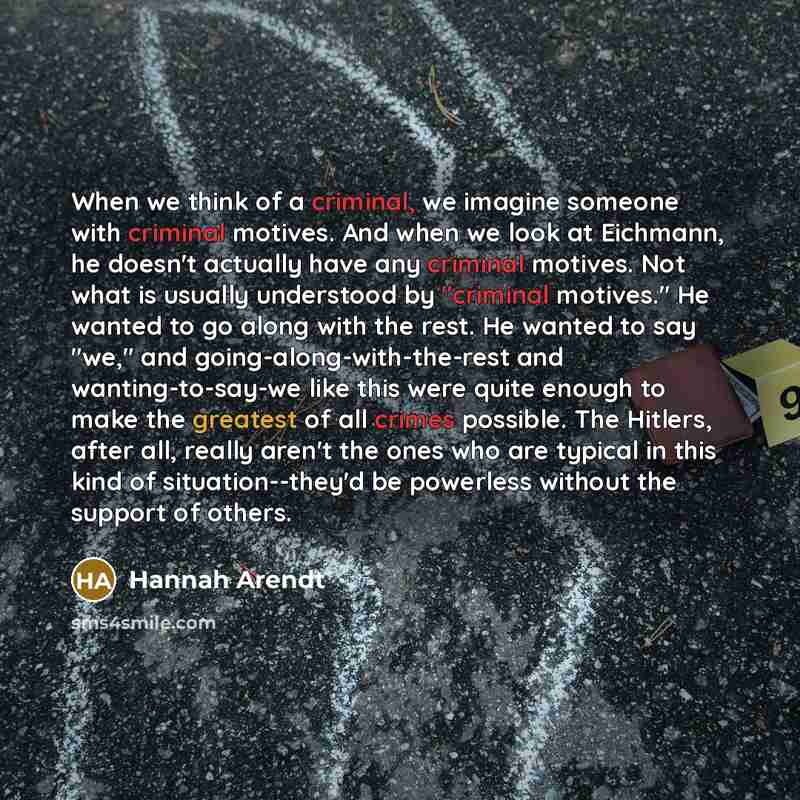
“When we think of a criminal, we imagine someone with criminal motives. And when we look at Eichmann, he doesn't actually have any criminal motives. Not what is usually understood by "criminal motives." He wanted to go along with the rest. He wanted to say "we," and going-along-with-the-rest and wanting-to-say-we like this were quite enough to make the greatest of all crimes possible. The Hitlers, after all, really aren't the ones who are typical in this kind of situation--they'd be powerless without the support of others.”
About This Quote
This interpretation was drafted with AI assistance. It is one reading of the quote, not the author's own explanation.
Eichmann’s crimes stemmed from blind conformity rather than personal evil intent; ordinary people can enable atrocities by following the crowd.
In simple terms: Ordinary compliance can cause great evil.
Key Takeaway
Beware of unthinking conformity.
Themes
morality
conformity
evil
Mood
thoughtful
critical
Type
philosophical
historical
When to use this quote
- workplace culture
- political movements
- education
- law enforcement
Key Concepts
banality of evil
social psychology
responsibility
Questions to Reflect On
- What motivates people to follow harmful orders?
- How can societies foster moral independence?
A Different Perspective
Not all perpetrators act from personal malice; context matters.