I wasn't good at pretending, that was the thing. After…
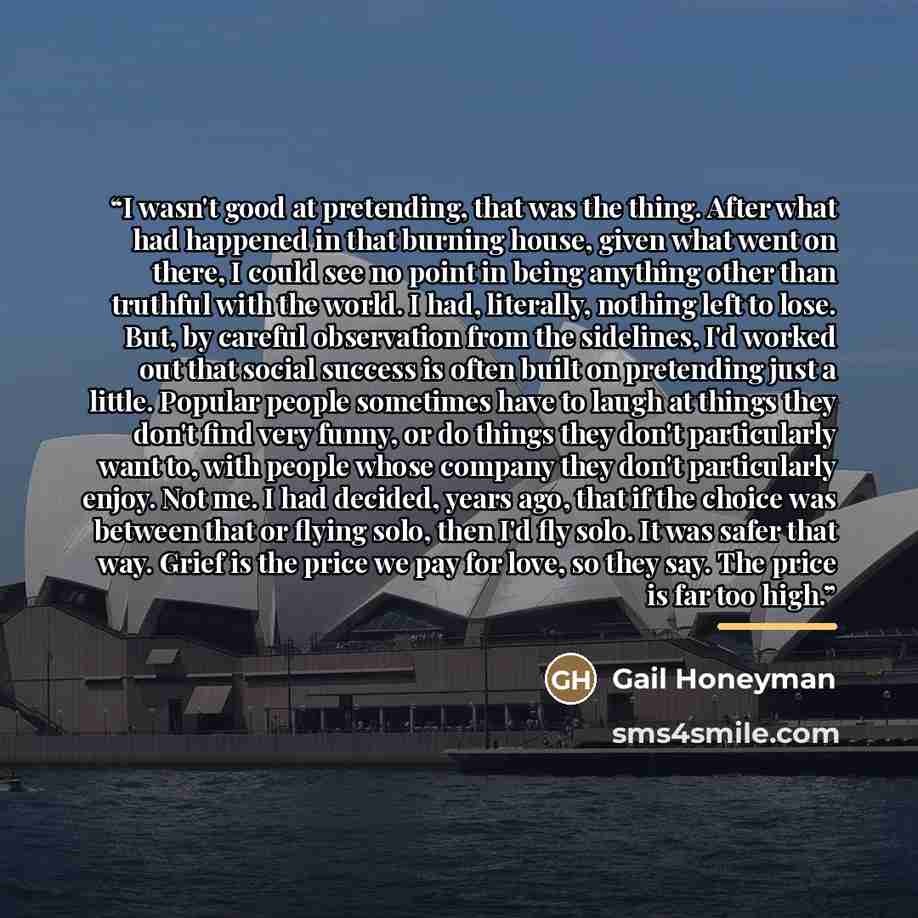
““I wasn't good at pretending, that was the thing. After what had happened in that burning house, given what went on there, I could see no point in being anything other than truthful with the world. I had, literally, nothing left to lose. But, by careful observation from the sidelines, I'd worked out that social success is often built on pretending just a little. Popular people sometimes have to laugh at things they don't find very funny, or do things they don't particularly want to, with people whose company they don't particularly enjoy. Not me. I had decided, years ago, that if the choice was between that or flying solo, then I'd fly solo. It was safer that way. Grief is the price we pay for love, so they say. The price is far too high.””
About This Quote
This interpretation was drafted with AI assistance. It is one reading of the quote, not the author's own explanation.
The narrator chooses honesty over social pretense, accepting isolation to avoid the pain of pretending, especially after trauma.
In simple terms: Choosing truth over pretending, even if it means being alone.
Key Takeaway
Embrace authenticity, even if it feels lonely.
Themes
authenticity
loneliness
grief
social pressure
self‑preservation
Mood
reflective
somber
determined
Type
philosophical
personal
narrative
When to use this quote
- navigating grief
- building genuine relationships
- career choices
- personal boundaries
Key Concepts
existential honesty
social conformity
trauma response
Questions to Reflect On
- Is it worth sacrificing connection for honesty?
- How can one balance authenticity with social harmony?
A Different Perspective
True authenticity may limit social opportunities and increase loneliness.