I found that the very people who said that mankind was one…
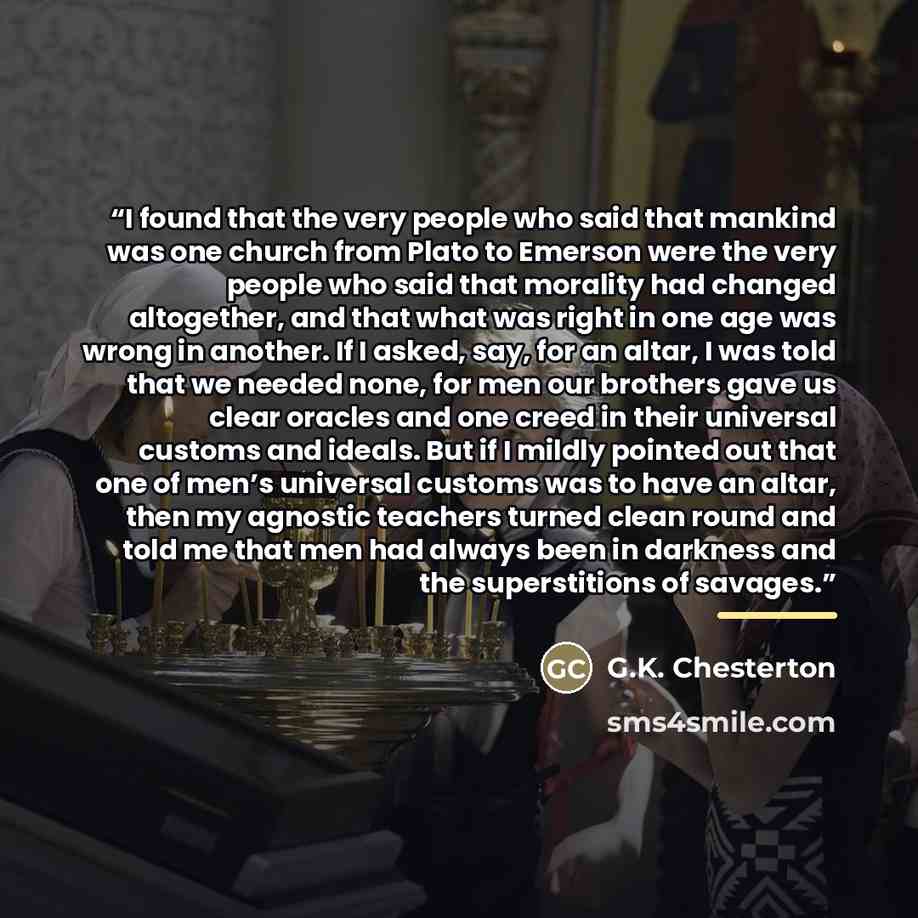
““I found that the very people who said that mankind was one church from Plato to Emerson were the very people who said that morality had changed altogether, and that what was right in one age was wrong in another. If I asked, say, for an altar, I was told that we needed none, for men our brothers gave us clear oracles and one creed in their universal customs and ideals. But if I mildly pointed out that one of men’s universal customs was to have an altar, then my agnostic teachers turned clean round and told me that men had always been in darkness and the superstitions of savages.””
About This Quote
This interpretation was drafted with AI assistance. It is one reading of the quote, not the author's own explanation.
The author critiques relativistic morality, arguing that claiming universal ethics while denying traditional symbols like altars is contradictory.
In simple terms: Morality isn’t purely relative; traditions hold value.
Key Takeaway
Recognize the limits of moral relativism.
Themes
morality
tradition
relativism
Mood
thoughtful
critical
Type
philosophical
analytical
When to use this quote
- academic debate
- religious discussion
- personal reflection
Key Concepts
philosophy
ethics
cultural criticism
Questions to Reflect On
- How do you balance universal principles with cultural differences?
- Can symbols be both universal and adaptable?
A Different Perspective
Relativism can ignore historical continuity and shared human experience.