The worm doth woo the mortal, death claims a living bride…
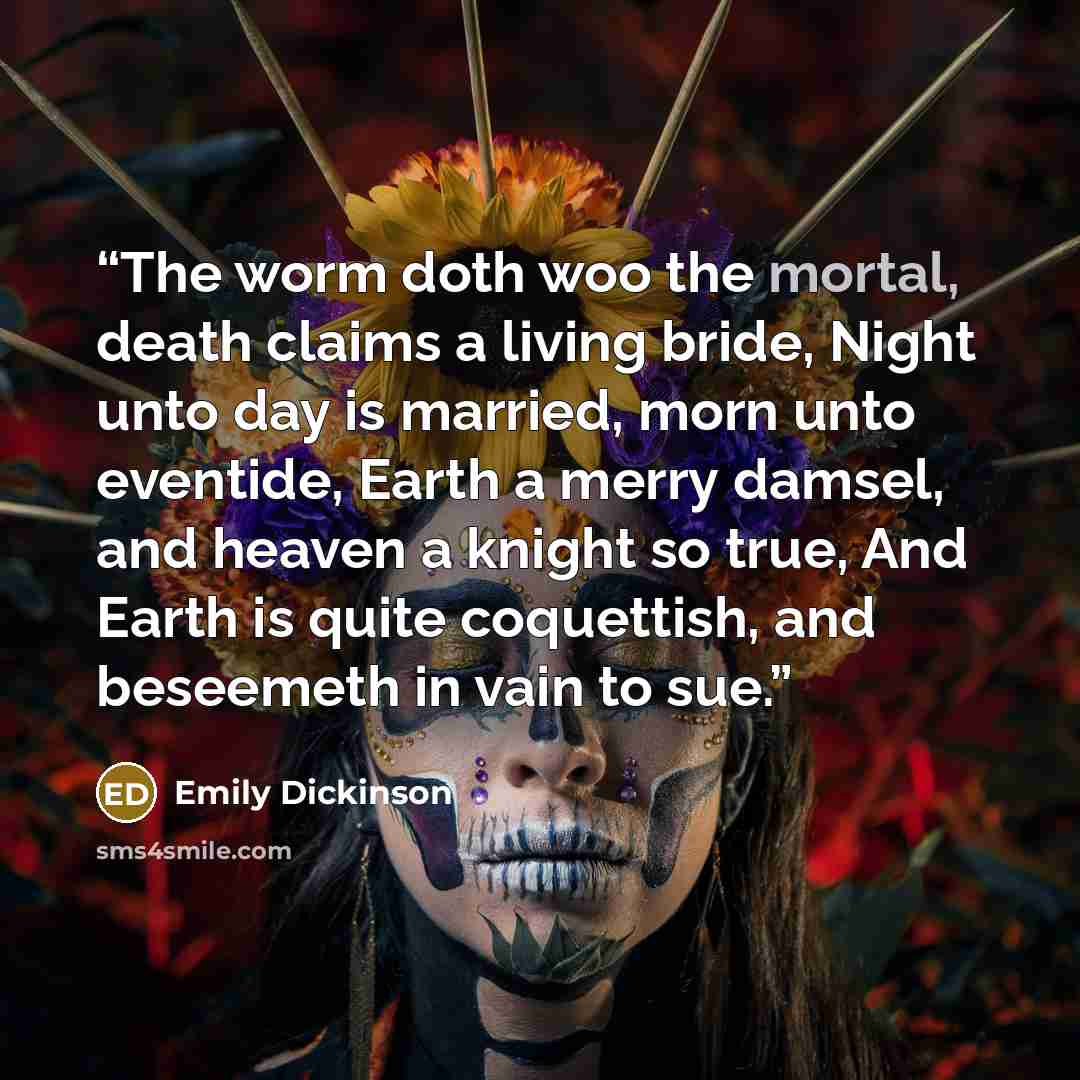
““The worm doth woo the mortal, death claims a living bride, Night unto day is married, morn unto eventide, Earth a merry damsel, and heaven a knight so true, And Earth is quite coquettish, and beseemeth in vain to sue.””
About This Quote
This interpretation was drafted with AI assistance. It is one reading of the quote, not the author's own explanation.
The poem juxtaposes natural cycles and relationships, portraying death and marriage as intertwined, and Earth and Heaven as complementary partners in a playful, almost flirtatious dance.
In simple terms: Nature and love are linked in a whimsical way.
Key Takeaway
See life as a dance of opposites.
Themes
nature
love
death
duality
Mood
contemplative
playful
Type
poetic
metaphorical
When to use this quote
- writing poetry
- reflecting on mortality
- exploring relationships
- appreciating cycles
Key Concepts
romanticism
personification
metaphor
Questions to Reflect On
- How do you interpret the marriage of night and day?
- What does Earth as a damsel suggest about femininity?
A Different Perspective
The abstract imagery may be hard to visualize for some readers.