When is it considered a true desire of moksha (ultimate…
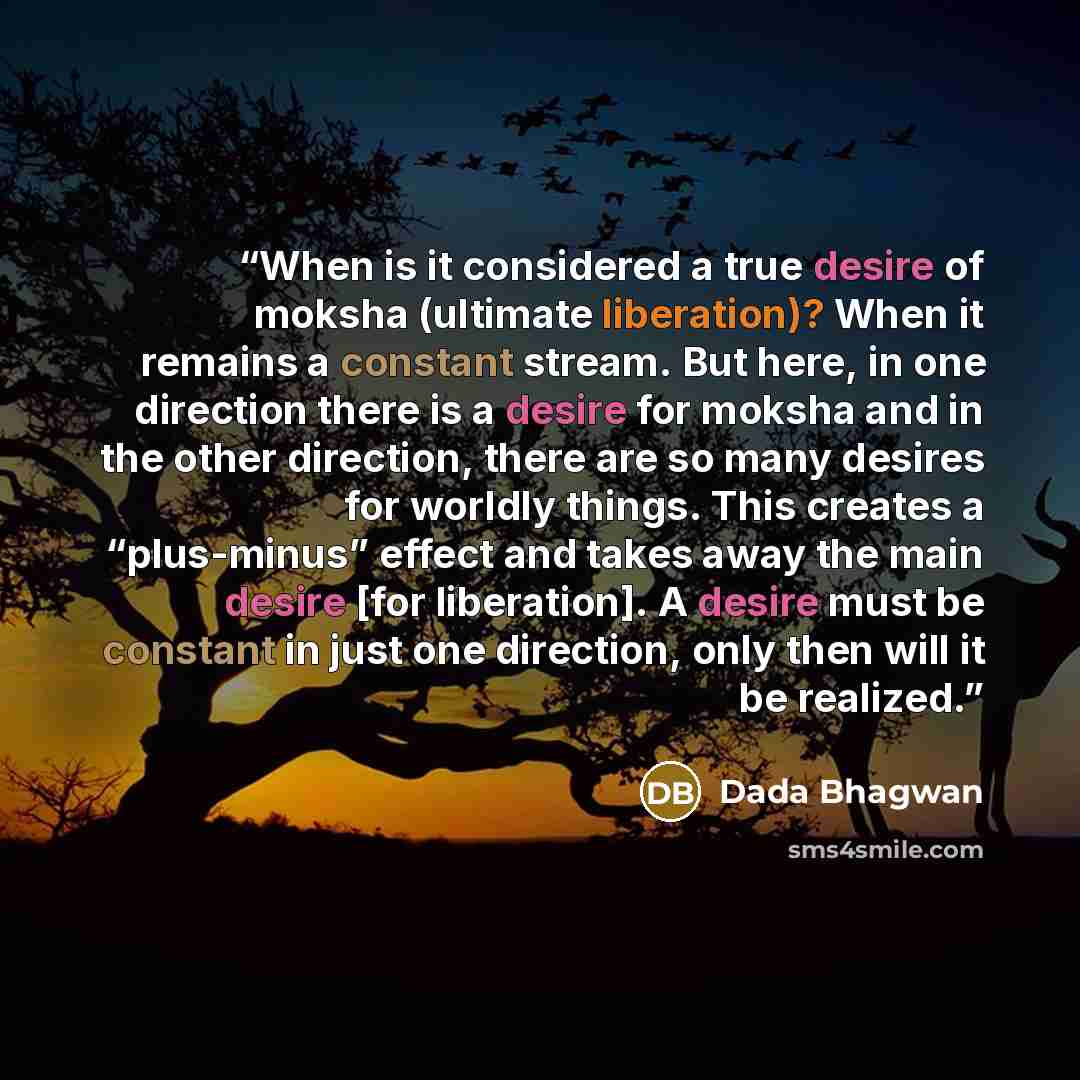
““When is it considered a true desire of moksha (ultimate liberation)? When it remains a constant stream. But here, in one direction there is a desire for moksha and in the other direction, there are so many desires for worldly things. This creates a “plus-minus” effect and takes away the main desire [for liberation]. A desire must be constant in just one direction, only then will it be realized.””
About This Quote
This interpretation was drafted with AI assistance. It is one reading of the quote, not the author's own explanation.
A true desire for liberation must be unwavering and singular; mixed motives dilute the path to moksha.
In simple terms: Pure, single‑minded longing leads to liberation.
Key Takeaway
Focus solely on spiritual aim.
Themes
spirituality
focus
detachment
Mood
contemplative
determined
Type
philosophical
motivational
When to use this quote
- meditation practice
- life decisions
- goal setting
- overcoming distractions
Key Concepts
moksha
single‑mindedness
inner conflict
Questions to Reflect On
- How can you identify and release competing worldly desires?
- What practices help maintain a singular spiritual focus?
A Different Perspective
Human nature often pulls toward multiple goals, making constant single‑direction desire hard to sustain.