I watched these young people read to the audience parts of…
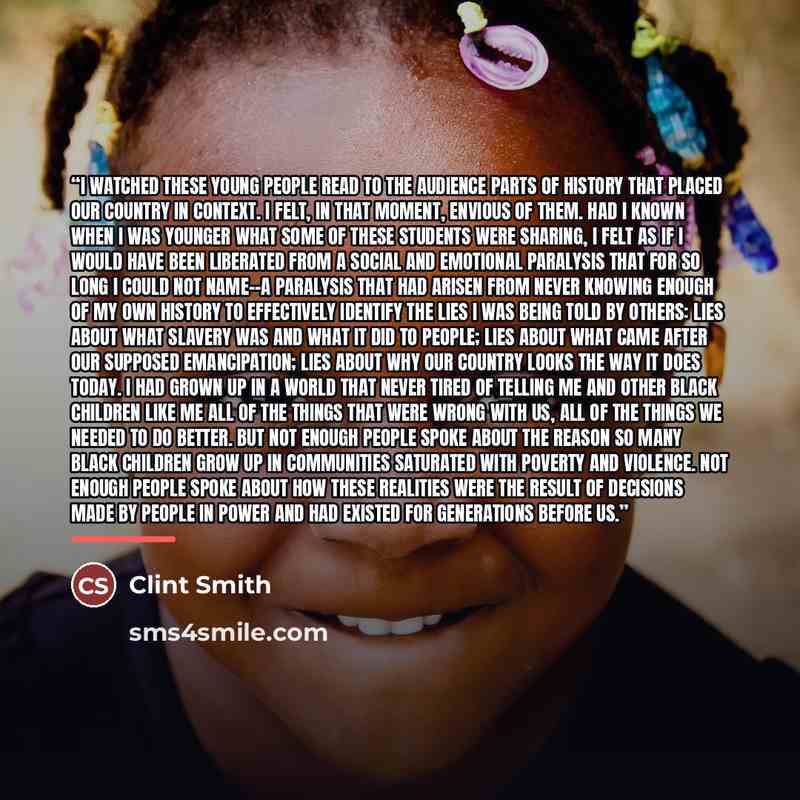
““I watched these young people read to the audience parts of history that placed our country in context. I felt, in that moment, envious of them. Had I known when I was younger what some of these students were sharing, I felt as if I would have been liberated from a social and emotional paralysis that for so long I could not name--a paralysis that had arisen from never knowing enough of my own history to effectively identify the lies I was being told by others: lies about what slavery was and what it did to people; lies about what came after our supposed emancipation; lies about why our country looks the way it does today. I had grown up in a world that never tired of telling me and other Black children like me all of the things that were wrong with us, all of the things we needed to do better. But not enough people spoke about the reason so many Black children grow up in communities saturated with poverty and violence. Not enough people spoke about how these realities were the result of decisions made by people in power and had existed for generations before us.””
About This Quote
This interpretation was drafted with AI assistance. It is one reading of the quote, not the author's own explanation.
Learning history empowers liberation from imposed narratives and systemic oppression.
In simple terms: History knowledge frees us from false narratives.
Key Takeaway
Study history to challenge systemic lies.
Themes
education
history
social justice
identity
Mood
determined
hopeful
Type
activist
inspirational
When to use this quote
- classroom teaching
- community activism
- policy reform
Key Concepts
critical thinking
historical awareness
Questions to Reflect On
- What historical truths have you uncovered?
- How will you act on this knowledge?
A Different Perspective
History alone cannot fix structural inequality without action.