It is often much harder to get rid of books than it is to…
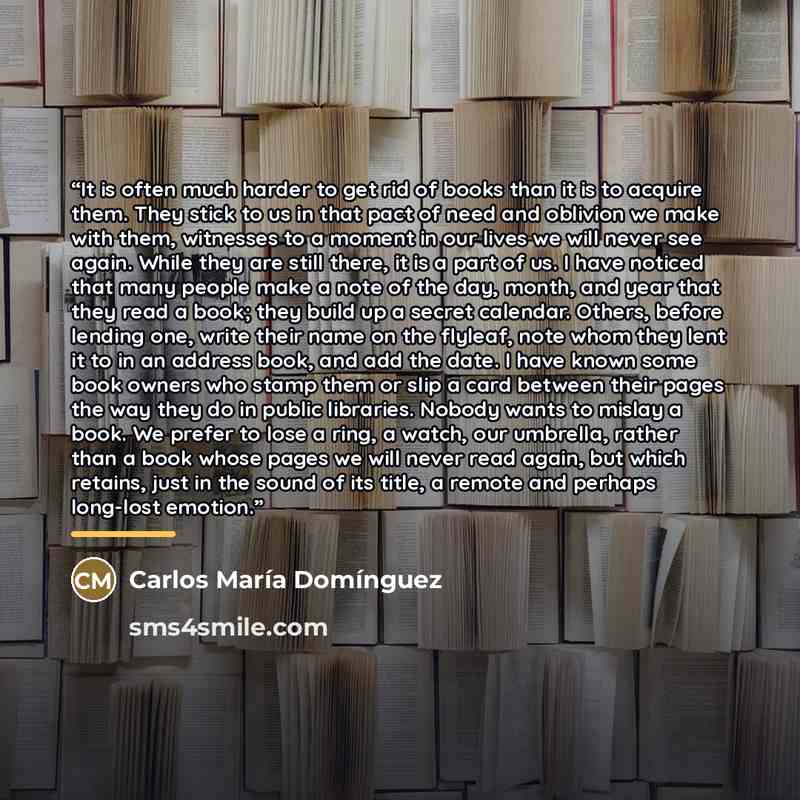
““It is often much harder to get rid of books than it is to acquire them. They stick to us in that pact of need and oblivion we make with them, witnesses to a moment in our lives we will never see again. While they are still there, it is a part of us. I have noticed that many people make a note of the day, month, and year that they read a book; they build up a secret calendar. Others, before lending one, write their name on the flyleaf, note whom they lent it to in an address book, and add the date. I have known some book owners who stamp them or slip a card between their pages the way they do in public libraries. Nobody wants to mislay a book. We prefer to lose a ring, a watch, our umbrella, rather than a book whose pages we will never read again, but which retains, just in the sound of its title, a remote and perhaps long-lost emotion.””
About This Quote
This interpretation was drafted with AI assistance. It is one reading of the quote, not the author's own explanation.
Books become personal artifacts that hold emotional resonance, linking us to moments we cannot revisit, prompting rituals to preserve them.
In simple terms: Books are emotionally significant.
Key Takeaway
Treat books with care.
Themes
memory
attachment
rituals
Mood
reflective
nostalgic
Type
personal
philosophical
When to use this quote
- personal libraries
- gift giving
- archiving
Key Concepts
Nostalgia
material culture
Questions to Reflect On
- What personal objects hold similar emotional weight for you?
- How do you decide which books to keep?
A Different Perspective
Physical books can be lost or damaged despite care.