That I feed the beggar, that I forgive an insult, that I…
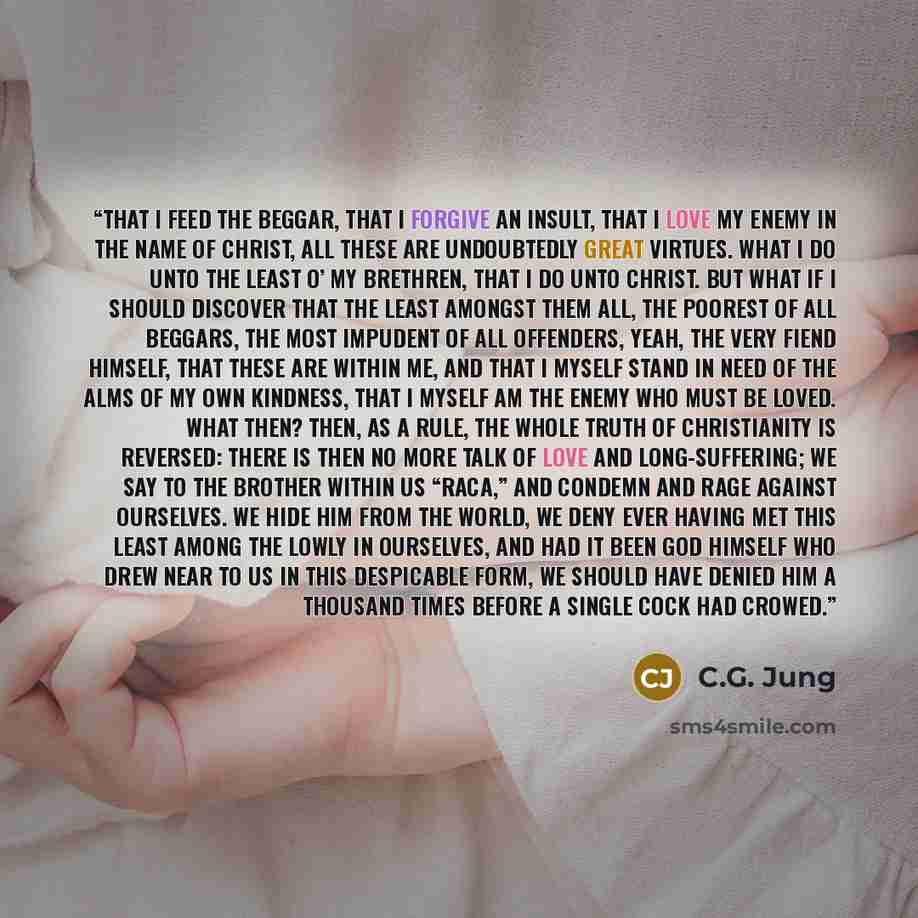
““That I feed the beggar, that I forgive an insult, that I love my enemy in the name of Christ, all these are undoubtedly great virtues. What I do unto the least o’ my brethren, that I do unto Christ. But what if I should discover that the least amongst them all, the poorest of all beggars, the most impudent of all offenders, yeah, the very fiend himself, that these are within me, and that I myself stand in need of the alms of my own kindness, that I myself am the enemy who must be loved. What then? Then, as a rule, the whole truth of Christianity is reversed: there is then no more talk of love and long-suffering; we say to the brother within us “Raca,” and condemn and rage against ourselves. We hide him from the world, we deny ever having met this least among the lowly in ourselves, and had it been God himself who drew near to us in this despicable form, we should have denied him a thousand times before a single cock had crowed.””
About This Quote
This interpretation was drafted with AI assistance. It is one reading of the quote, not the author's own explanation.
The passage challenges the notion that external acts of charity are enough, urging self‑recognition of one’s own flaws and the need to love oneself.
In simple terms: Love must include self‑acceptance of our own faults.
Key Takeaway
Accept and love your inner flaws.
Themes
self‑compassion
humility
spirituality
Mood
reflective
introspective
Type
philosophical
spiritual
When to use this quote
- personal therapy
- spiritual practice
- conflict resolution
- ethical decision making
Key Concepts
Christian ethics
psychology
self‑reflection
Questions to Reflect On
- How do you recognize your own inner enemy?
- Can loving yourself coexist with loving others?
A Different Perspective
Self‑love can be uncomfortable and may clash with traditional moral teachings.