No, Maximilien, I am not offended," answered she, "but do…
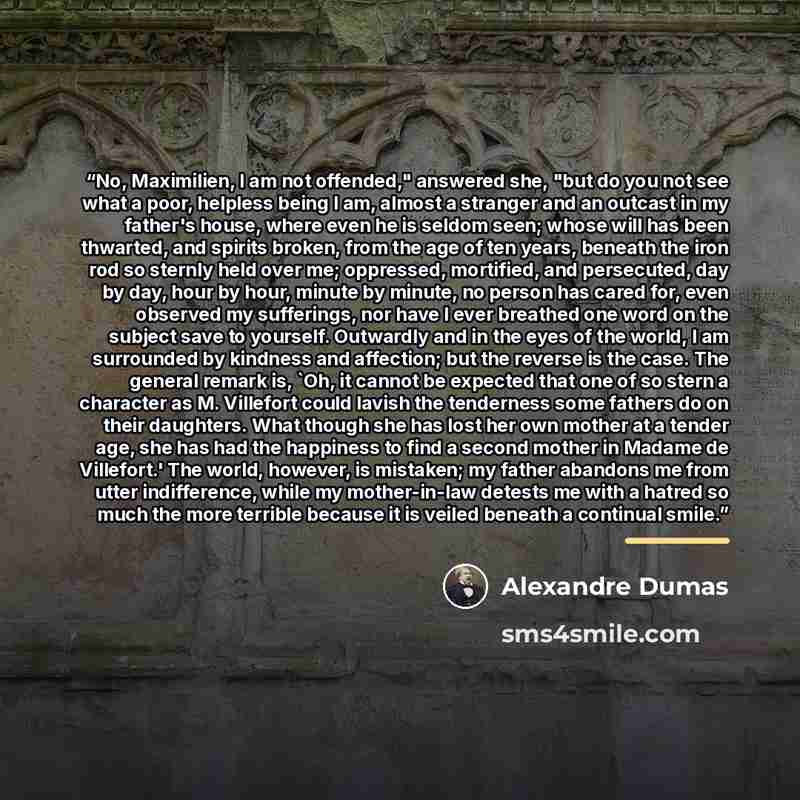
““No, Maximilien, I am not offended," answered she, "but do you not see what a poor, helpless being I am, almost a stranger and an outcast in my father's house, where even he is seldom seen; whose will has been thwarted, and spirits broken, from the age of ten years, beneath the iron rod so sternly held over me; oppressed, mortified, and persecuted, day by day, hour by hour, minute by minute, no person has cared for, even observed my sufferings, nor have I ever breathed one word on the subject save to yourself. Outwardly and in the eyes of the world, I am surrounded by kindness and affection; but the reverse is the case. The general remark is, 'Oh, it cannot be expected that one of so stern a character as M. Villefort could lavish the tenderness some fathers do on their daughters. What though she has lost her own mother at a tender age, she has had the happiness to find a second mother in Madame de Villefort.' The world, however, is mistaken; my father abandons me from utter indifference, while my mother-in-law detests me with a hatred so much the more terrible because it is veiled beneath a continual smile.””
About This Quote
This interpretation was drafted with AI assistance. It is one reading of the quote, not the author's own explanation.
A young woman feels isolated and neglected by her family, despite outward appearances of kindness, revealing deep emotional abandonment and hypocrisy.
In simple terms: She feels unseen and unloved inside her own home.
Key Takeaway
Recognize hidden suffering behind polite façades.
Themes
family
isolation
hypocrisy
emotional neglect
female vulnerability
Mood
melancholy
reflective
empathetic
Type
literary
emotional
dramatic
When to use this quote
- marriage counseling
- mental health support
- conflict resolution
- parental expectations
Key Concepts
psychological trauma
social façade
family dynamics
Questions to Reflect On
- How do you respond when you sense hidden pain in someone close?
- What can you do to reveal genuine care beyond appearances?
A Different Perspective
The narrative may over‑dramatize personal anguish, not accounting for broader family complexities.