The End is included among goods of the soul, and not among external goods. — Aristotle Copy Share Image
To attain any assured knowledge about the soul is one of the most difficult things in the world. — Aristotle Copy Share Image
Character is that which reveals moral purpose, exposing the class of things a man chooses and avoids. — Aristotle Copy Share Image
That in the soul which is called the mind is, before it thinks, not actually any real thing. — Aristotle Copy Share Image
We must no more ask whether the soul and body are one than ask whether the wax and the figure impressed on… — Aristotle Copy Share Image
To be always seeking after the useful does not become free and exalted souls. — Aristotle Copy Share Image
Of the irrational part of the soul again one division appears to be common to all living things, and of a vegetative… — Aristotle Copy Share Image
The soul is characterized by these capacities; self-nutrition, sensation, thinking, and movement. — Aristotle Copy Share Image
Two characteristic marks have above all others been recognized as distinguishing that which has soul in it from that which has not… — Aristotle Copy Share Image
Where your talents and the needs of the world cross, therein lies your vocation. These two, your talents and the needs of… — Aristotle Copy Share Image
The beauty of the soul shines out when a man bears with composure one heavy mischance after another, not because he does… — Aristotle Copy Share Image
“No excellent soul is exempt from a mixture of madness. - Aristotle (Attributed by Seneca in Moral Essays, "De Tranquillitate Animi" On… — Aristotle Copy Share Image
Every formed disposition of the soul realizes its full nature in relation to and dealing with that class of objects by which… — Aristotle Copy Share Image
The soul of animals is characterized by two faculties, (a) the faculty of discrimination which is the work of thought and sense,… — Aristotle Copy Share Image
Music imitates (represents) the passions or states of the soul, such as gentleness, anger, courage, temperance, and their opposites. — Aristotle Copy Share Image
The good of man is the active exercise of his soul's faculties. This exercise must occupy a complete lifetime. One swallow does… — Aristotle Copy Share Image
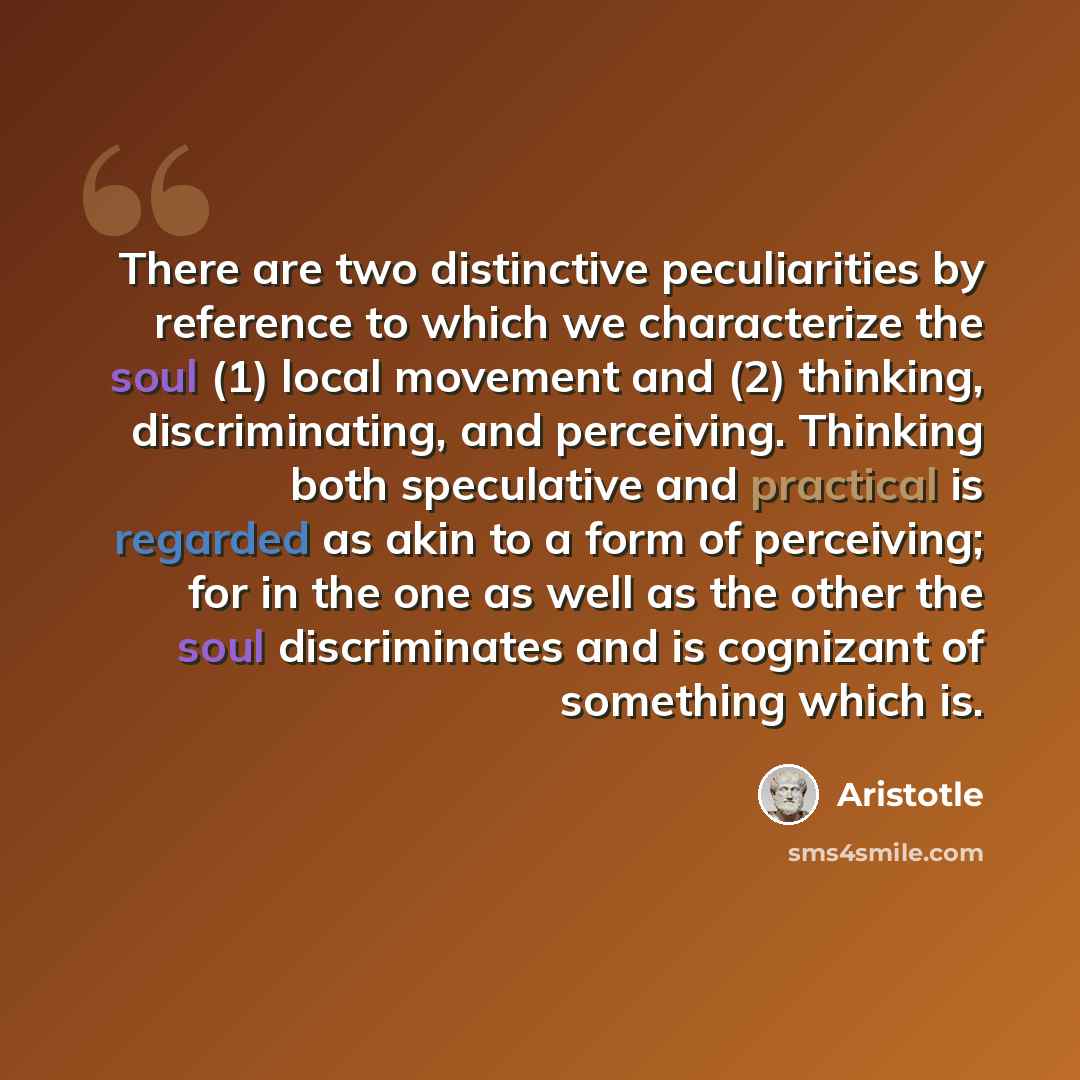
There are two distinctive peculiarities by reference to which we characterize the soul (1) local movement and (2) thinking, discriminating, and perceiving.… — Aristotle Copy Share Image
Justice is that virtue of the soul which is distributive according to desert. — Aristotle Copy Share Image
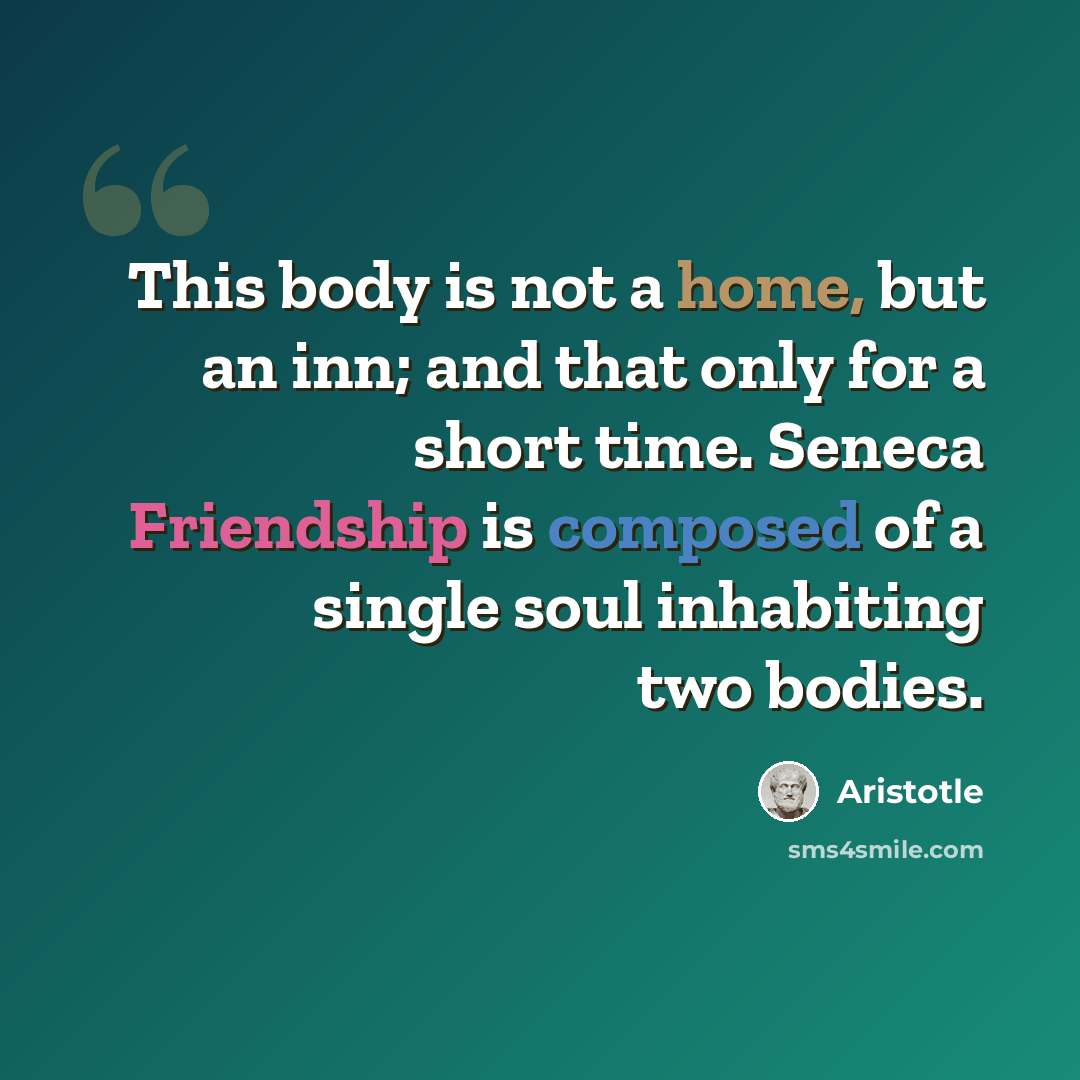
This body is not a home, but an inn; and that only for a short time. Seneca Friendship is composed of a… — Aristotle Copy Share Image
The knowledge of the soul admittedly contributes greatly to the advance of truth in general, and, above all, to our understanding of Nature, for… — Aristotle Copy Share
Young men have strong passions and tend to gratify them indiscriminately. Of the bodily desires, it is the sexual by which they are most… — Aristotle Copy Share
The body is at its best between the ages of thirty and thirty-five; the mind is at its best about the age of forty-nine. — Aristotle Copy Share
The ensouled is distinguished from the unsouled by its being alive. Now since being alive is spoken of in many ways, even if only… — Aristotle Copy Share
Although it may be difficult in theory to know what is just and equal, the practical difficulty of inducing those to forbear who can,… — Aristotle Copy Share
The true forms of government, therefore, are those in which the one, or the few, or the many, govern with a view to the… — Aristotle Copy Share
All persons ought to endeavor to follow what is right, and not what is established. — Aristotle Copy Share
Give a man a fish, you feed him for a day. Give a man a poisoned fish, you feed him for the rest of… — Aristotle Copy Share
Obstinate people can be divided into the opinionated, the ignorant, and the boorish. — Aristotle Copy Share
Happiness does not consist in pastimes and amusements but in virtuous activities. — Aristotle Copy Share
To learn is a natural pleasure, not confined to philosophers, but common to all men. — Aristotle Copy Share