The word is a sign or symbol of the impressions or affections of the soul. — Aristotle Copy Share Image
The soul suffers when the body is diseased or traumatized, while the body suffers when the soul is ailing. — Aristotle Copy Share Image
The student of politics therefore as well as the psychologist must study the nature of the soul. — Aristotle Copy Share Image
A change in the shape of the body creates a change in the state of the soul. — Aristotle Copy Share Image
Prosperity makes friends and adversity tries them. A true friend is one soul in two bodies — Aristotle Copy Share Image
The End is included among goods of the soul, and not among external goods. — Aristotle Copy Share Image
While the faculty of sensation is dependent upon the body, mind is separable from it — Aristotle Copy Share Image
To attain any assured knowledge about the soul is one of the most difficult things in the world. — Aristotle Copy Share Image
We have no evidence as yet about mind or the power to think; it seems to be a widely different kind of… — Aristotle Copy Share Image
Music directly represents the passions of the soul. If one listens to the wrong kind of music, he will become the wrong… — Aristotle Copy Share Image
But if nothing but soul, or in soul mind, is qualified to count, it is impossible for there to be time unless… — Aristotle Copy Share Image
Opinion involves belief (for without belief in what we opine we cannot have an opinion), and in the brutes though we often… — Aristotle Copy Share Image
The knowledge of the soul admittedly contributes greatly to the advance of truth in general, and, above all, to our understanding of… — Aristotle Copy Share Image
The heart is the perfection of the whole organism. Therefore the principles of the power of perception and the souls ability to… — Aristotle Copy Share Image
For as the eyes of bats are to the blaze of day, so is the reason in our soul to the things… — Aristotle Copy Share Image
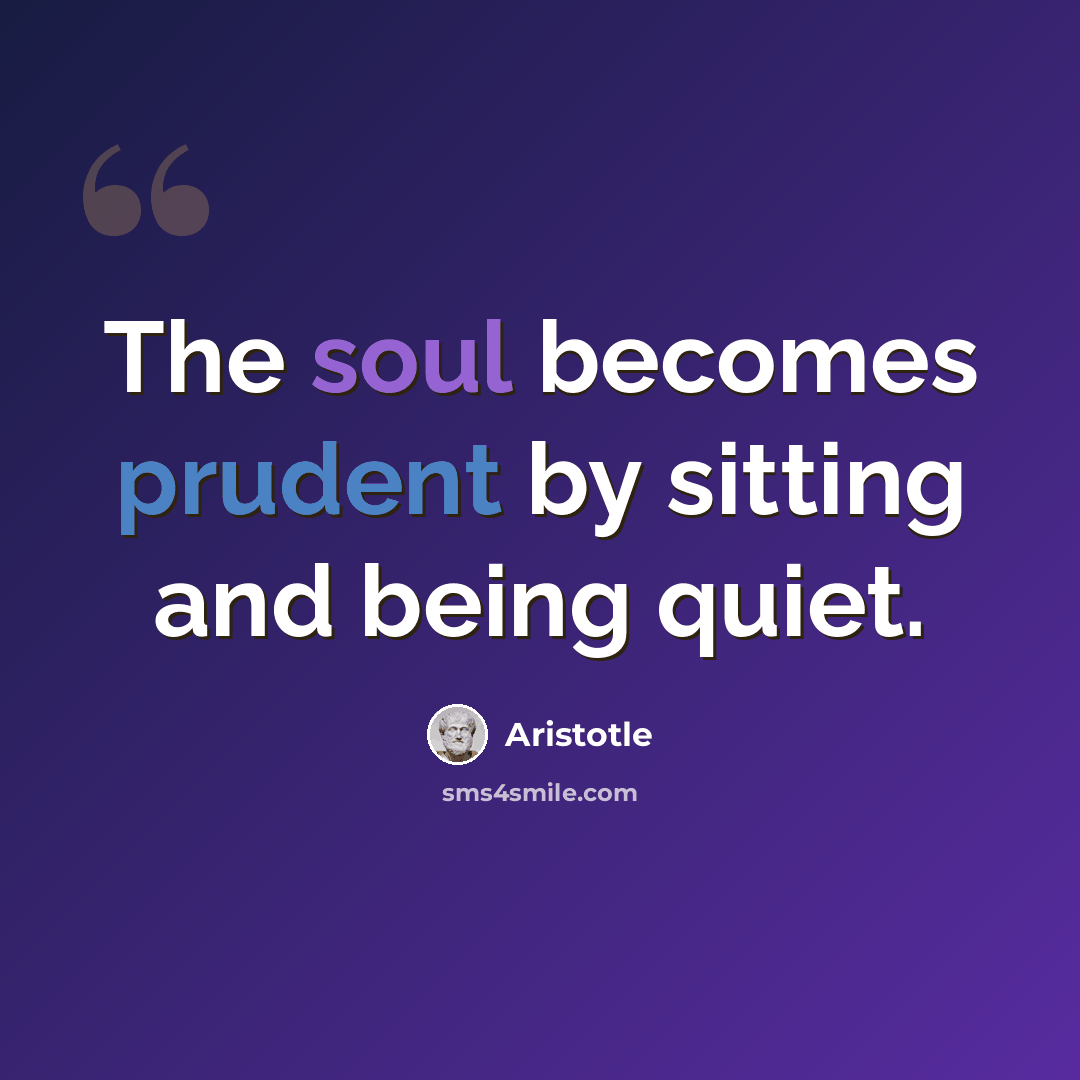
[this element], the seat of the appetites and of desire in general, does in a sense participate in principle, as being amenable… — Aristotle Copy Share Image
If a man of good natural disposition acquires Intelligence [as a whole], then he excels in conduct, and the disposition which previously… — Aristotle Copy Share Image
The ensouled is distinguished from the unsouled by its being alive. Now since being alive is spoken of in many ways, even… — Aristotle Copy Share Image
In [the soul] one part naturally rules, and the other is subject, and the virtue of the ruler we maintain to be… — Aristotle Copy Share Image
Music directly imitates the passions or states of the soul...when one listens to music that imitates a certain passion, he becomes imbued… — Aristotle Copy Share Image
Now the soul of man is divided into two parts, one of which has a rational principle in itself, and the other,… — Aristotle Copy Share Image
The soul is the cause or source of the living body. The terms cause and source have many senses. But the soul… — Aristotle Copy Share Image
Great and frequent reverses can crush and mar our bliss both by the pain they cause and by the hindrance they offer… — Aristotle Copy Share Image
If thinking is like perceiving, it must be either a process in which the soul is acted upon by what is capable… — Aristotle Copy Share Image
That in the soul which is called the mind is, before it thinks, not actually any real thing. — Aristotle Copy Share Image
We must no more ask whether the soul and body are one than ask whether the wax and the figure impressed on… — Aristotle Copy Share Image
To be always seeking after the useful does not become free and exalted souls. — Aristotle Copy Share Image
Of the irrational part of the soul again one division appears to be common to all living things, and of a vegetative… — Aristotle Copy Share Image
The soul is characterized by these capacities; self-nutrition, sensation, thinking, and movement. — Aristotle Copy Share Image
Justice is that virtue of the soul which is distributive according to desert. — Aristotle Copy Share Image
We have divided the Virtues of the Soul into two groups, the Virtues of the Character and the Virtues of the Intellect. — Aristotle Copy Share Image
Thinking is different from perceiving and is held to be in part imagination, in part judgment — Aristotle Copy Share Image
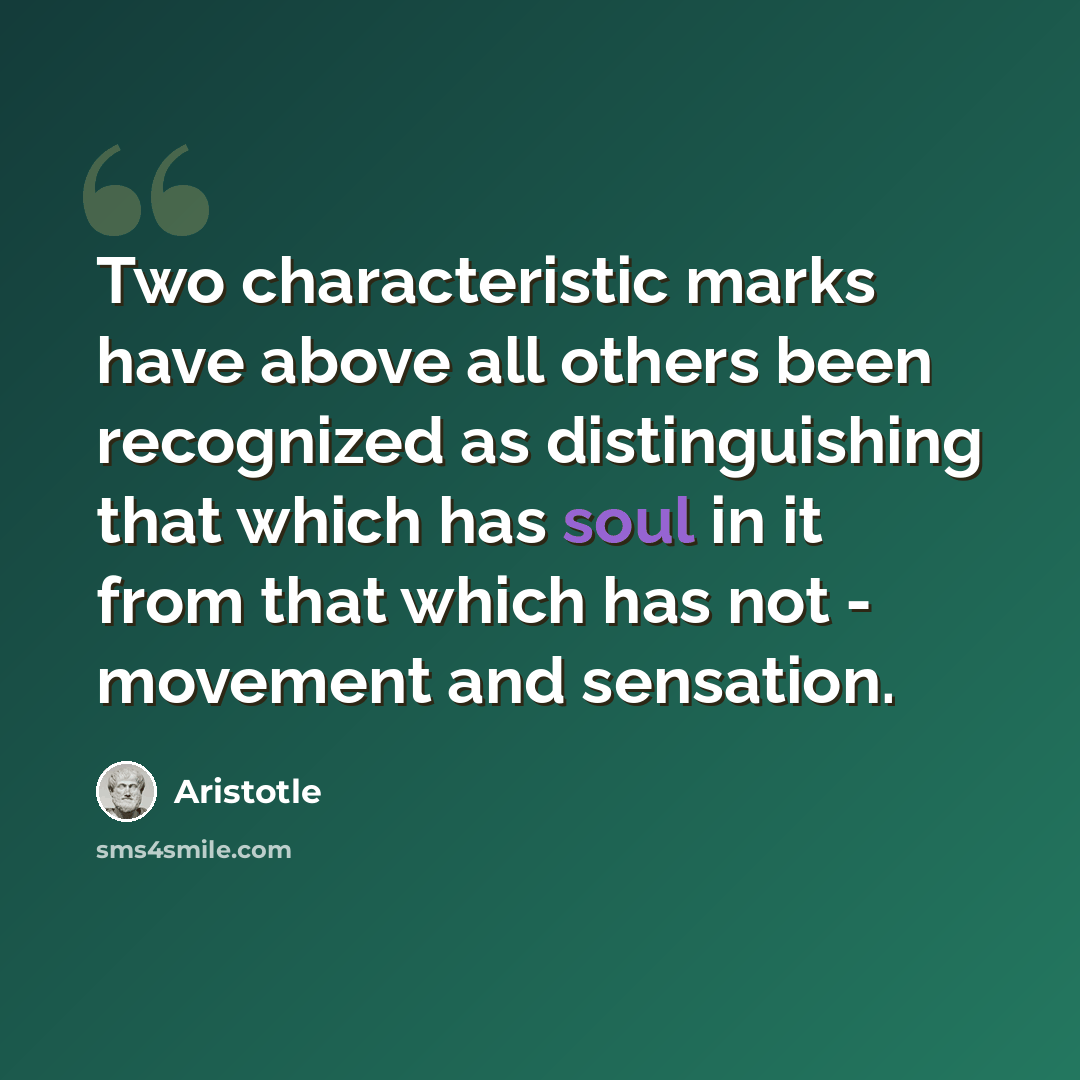
Two characteristic marks have above all others been recognized as distinguishing that which has soul in it from that which has not… — Aristotle Copy Share Image
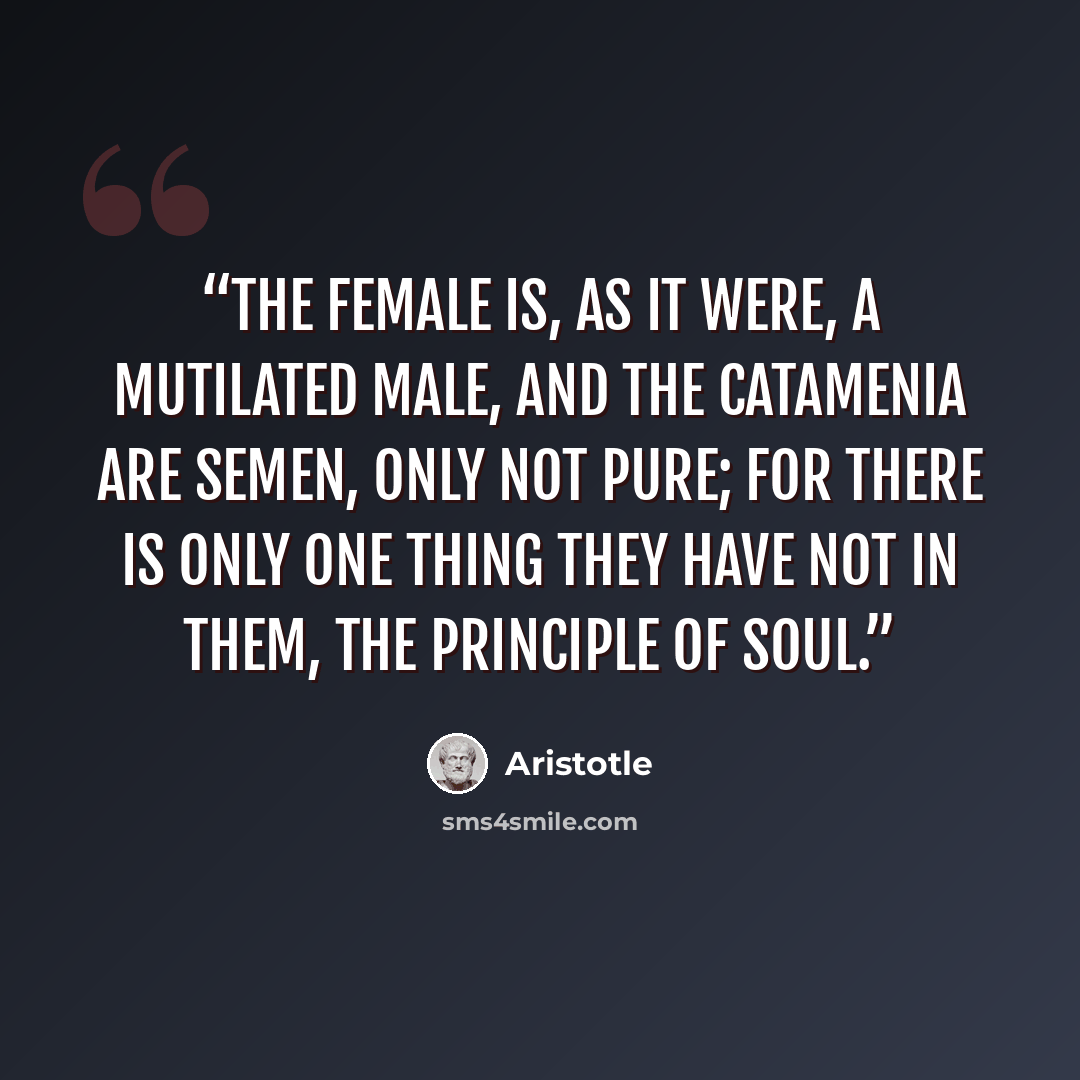
“The female is, as it were, a mutilated male, and the catamenia are semen, only not pure; for there is only one… — Aristotle Copy Share Image
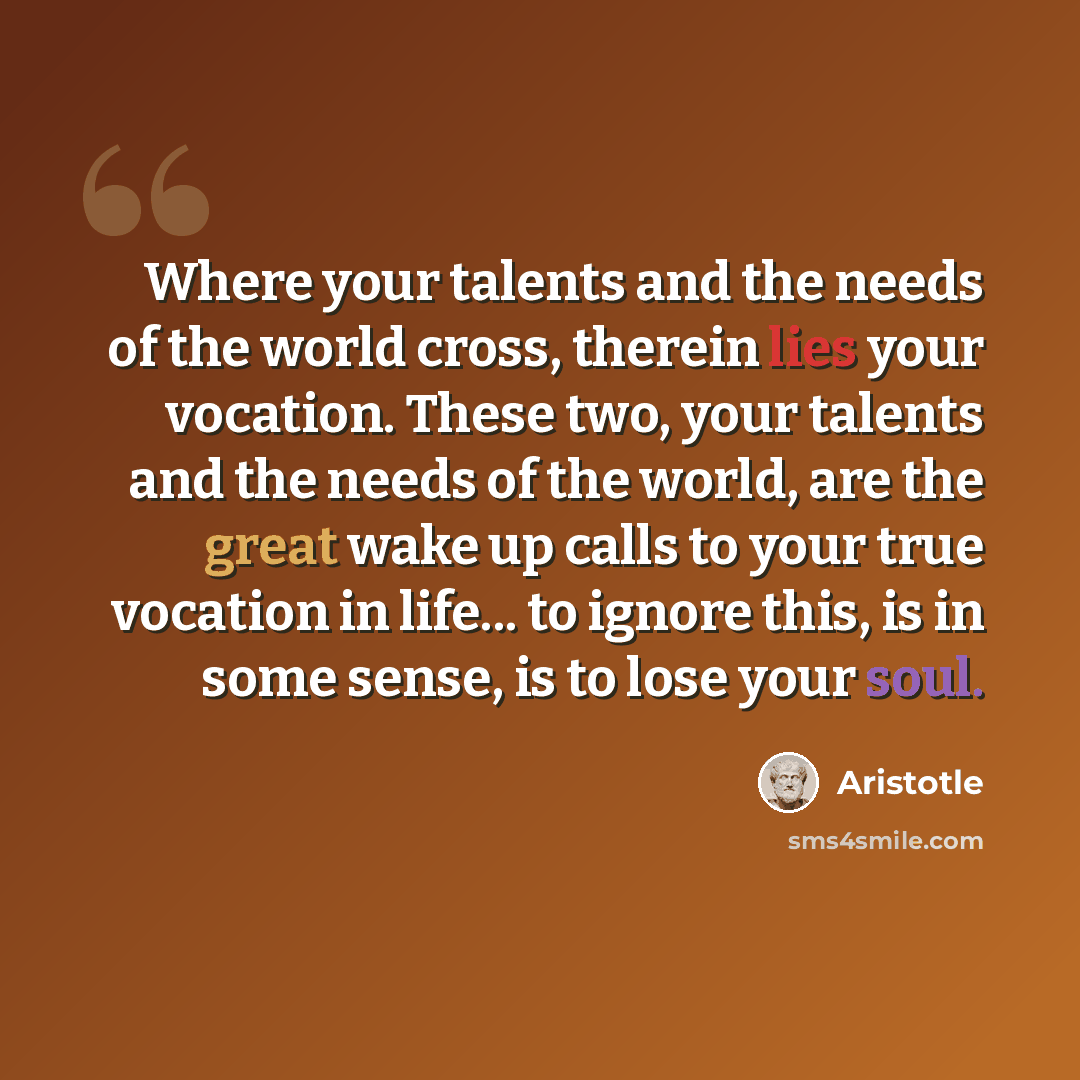
Where your talents and the needs of the world cross, therein lies your vocation. These two, your talents and the needs of… — Aristotle Copy Share Image
The knowledge of the soul admittedly contributes greatly to the advance of truth in general, and, above all, to our understanding of Nature, for… — Aristotle Copy Share
Young men have strong passions and tend to gratify them indiscriminately. Of the bodily desires, it is the sexual by which they are most… — Aristotle Copy Share
The body is at its best between the ages of thirty and thirty-five; the mind is at its best about the age of forty-nine. — Aristotle Copy Share
The ensouled is distinguished from the unsouled by its being alive. Now since being alive is spoken of in many ways, even if only… — Aristotle Copy Share
Although it may be difficult in theory to know what is just and equal, the practical difficulty of inducing those to forbear who can,… — Aristotle Copy Share
The true forms of government, therefore, are those in which the one, or the few, or the many, govern with a view to the… — Aristotle Copy Share
All persons ought to endeavor to follow what is right, and not what is established. — Aristotle Copy Share
Give a man a fish, you feed him for a day. Give a man a poisoned fish, you feed him for the rest of… — Aristotle Copy Share
Obstinate people can be divided into the opinionated, the ignorant, and the boorish. — Aristotle Copy Share
Happiness does not consist in pastimes and amusements but in virtuous activities. — Aristotle Copy Share
To learn is a natural pleasure, not confined to philosophers, but common to all men. — Aristotle Copy Share



![“[this element], the seat of the appetites and of desire in general, does in a sense participate in principle, as being amenable and obedient to it” quote by Aristotle](https://sms4smile.com/q/img-quotes/5ad/aristotle-78_amenable_this-element-the-seat-of-the-appetites-a_1340610.png)
![“If a man of good natural disposition acquires Intelligence [as a whole], then he excels in conduct, and the disposition which previously only resembled Virtue, will now be Virtue in the true sense. Hence just as with the faculty of forming opinions [the calculative faculty] there are two…” quote by Aristotle](https://sms4smile.com/q/img-quotes/89e/aristotle-78_acquire_if-a-man-of-good-natural-disposition-acq_342320.jpg)
![“In [the soul] one part naturally rules, and the other is subject, and the virtue of the ruler we maintain to be different from that of the subject; the one being the virtue of the rational, and the other of the irrational part. Now, it is obvious that the same principle applies generally, and…” quote by Aristotle](https://sms4smile.com/q/img-quotes/3df/aristotle-78_all-things_in-the-soul-one-part-naturally-rules-and_54509.jpg)