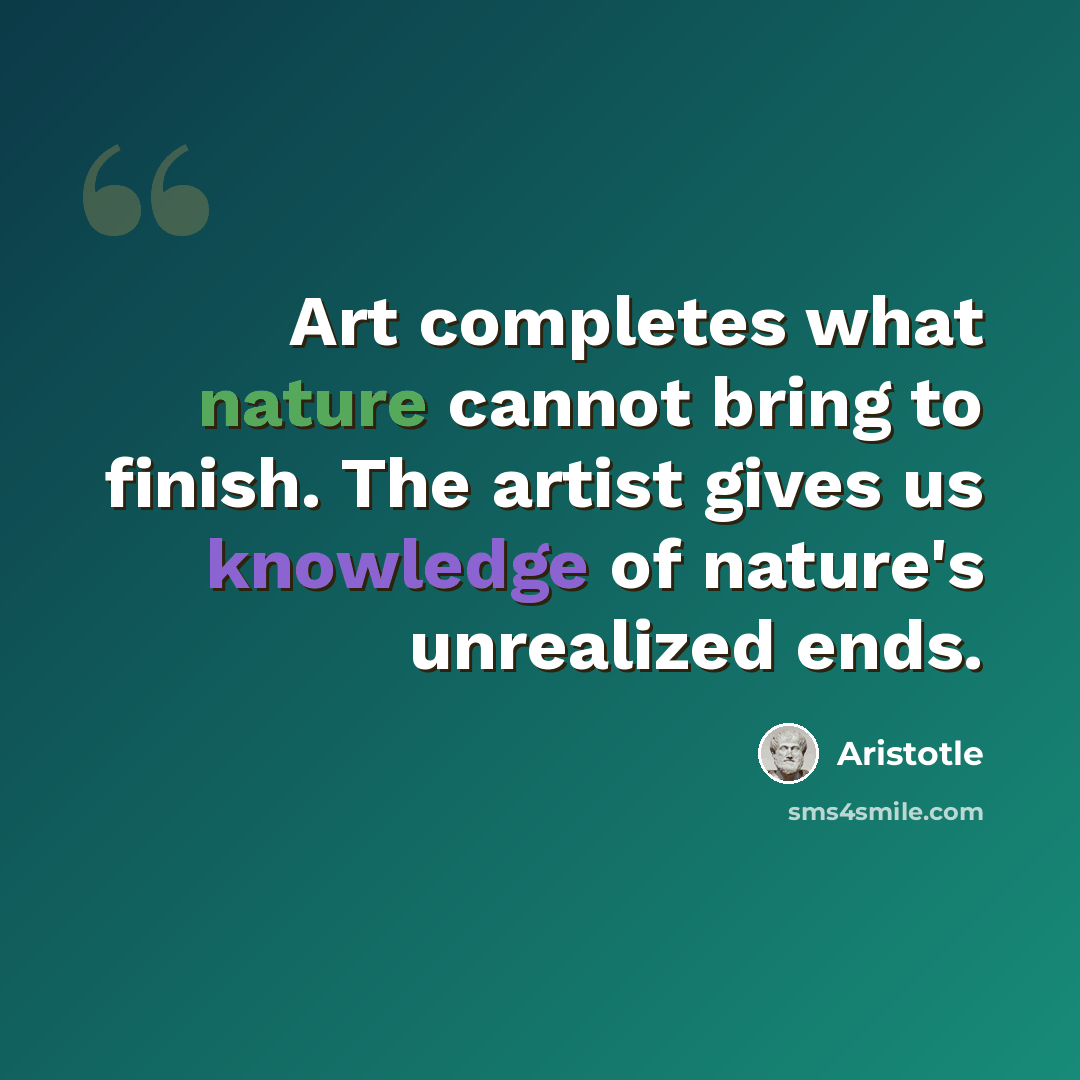
Art completes what nature cannot bring to finish. The artist gives us knowledge of nature's unrealized ends. — Aristotle Copy Share Image
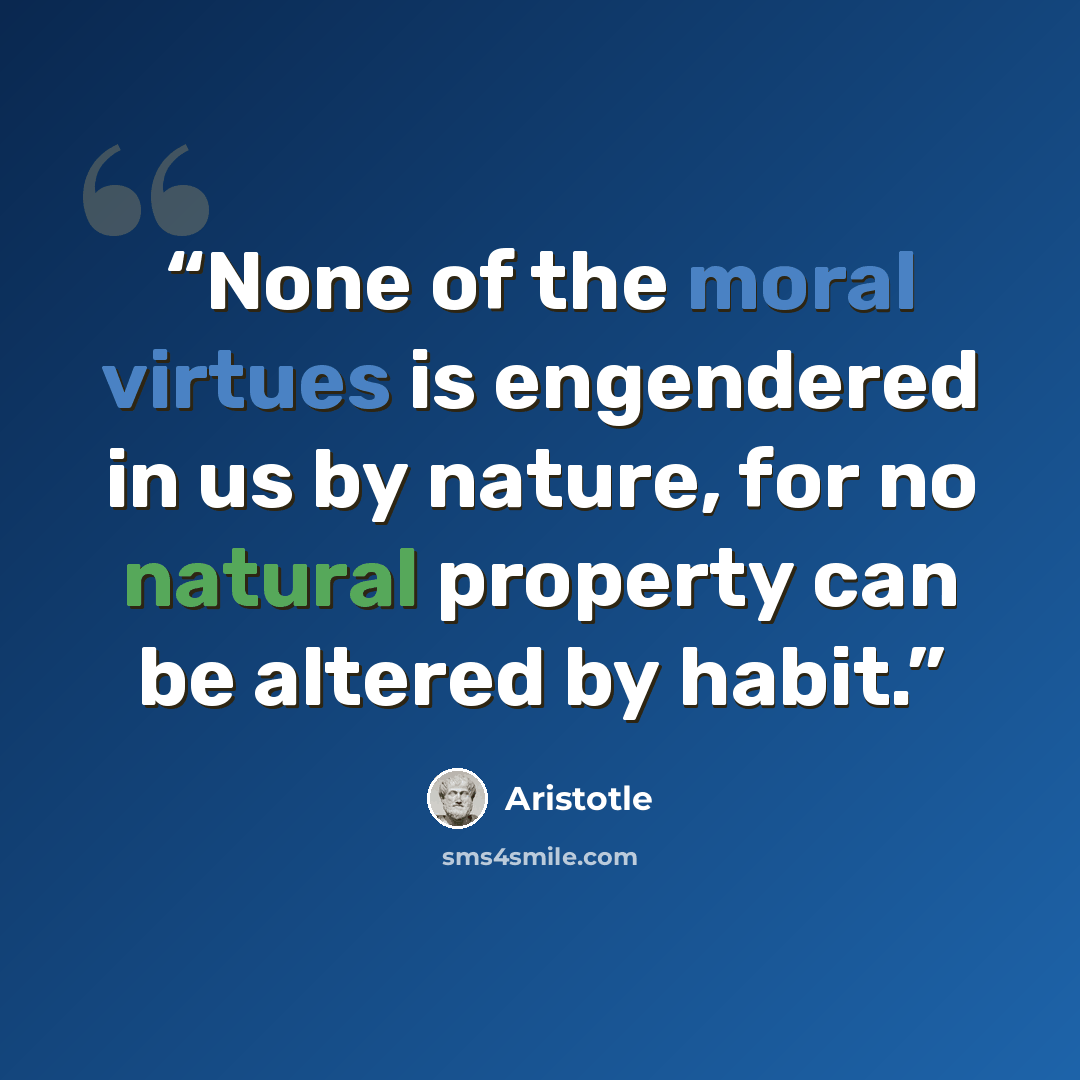
“None of the moral virtues is engendered in us by nature, for no natural property can be altered by habit.” — Aristotle Copy Share Image
In part, art completes what nature cannot elaborate; and in part it imitates nature. — Aristotle Copy Share Image
Men have a sufficient natural instinct for what is true, and usually do arrive at the truth. — Aristotle Copy Share Image
To learn is a natural pleasure, not confined to philosophers, but common to all men. — Aristotle Copy Share Image
The family is the association established by nature for the supply of man's everyday wants. — Aristotle Copy Share Image
But Nature flies from the infinite, for the infinite is unending or imperfect, and Nature ever seeks an end. — Aristotle Copy Share Image
Thus every action must be due to one or other of seven causes: chance, nature, compulsion, habit, reasoning, anger, or appetite. — Aristotle Copy Share Image
[Meanness] is more ingrained in man's nature than Prodigality; the mass of mankind are avaricious rather than open-handed. — Aristotle Copy Share Image
The moral virtues, then, are produced in us neither by nature nor against nature. Nature, indeed, prepares in us the ground for… — Aristotle Copy Share Image
The beginning of reform is not so much to equalize property as to train the noble sort of natures not to desire… — Aristotle Copy Share Image
We must not feel a childish disgust at the investigations of the meaner animals. For there is something marvelous in all natural… — Aristotle Copy Share Image
“Happiness is a kind of activity of the soul; whereas the remaining good things are either merely indispensable conditions of happiness, or… — Aristotle Copy Share Image
All art is concerned with coming into being; for it is concerned neither with things that are, or come into being by… — Aristotle Copy Share Image
...in this way the structure of the universe- I mean, of the heavens and the earth and the whole world- was arranged… — Aristotle Copy Share Image
The search for truth is in one way hard and in another way easy, for it is evident that no one can… — Aristotle Copy Share Image
If then, as we say, good craftsmen look to the mean as they work, and if virtue, like nature, is more accurate… — Aristotle Copy Share Image
Nature herself, as has been often said, requires that we should be able, not only to work well, but to use leisure… — Aristotle Copy Share Image
The family is the association established by nature for the supply of men's everyday wants. — Aristotle Copy Share Image
He who sees things grow from the beginning will have the best view of them. — Aristotle Copy Share Image
“Not in depraved things, but in those well oriented according to nature, are we to consider what is natural.” — Aristotle Copy Share Image
He who can be, and therefore is, another's, and he who participates in reason enough to apprehend, but not to have, is… — Aristotle Copy Share Image
“The virtues therefore are engendered in us neither by nature nor yet in violation of nature; nature gives us the capacity to… — Aristotle Copy Share Image
The virtues [moral excellence] therefore are engendered in us neither by nature nor yet in violation of nature; nature gives us the… — Aristotle Copy Share Image
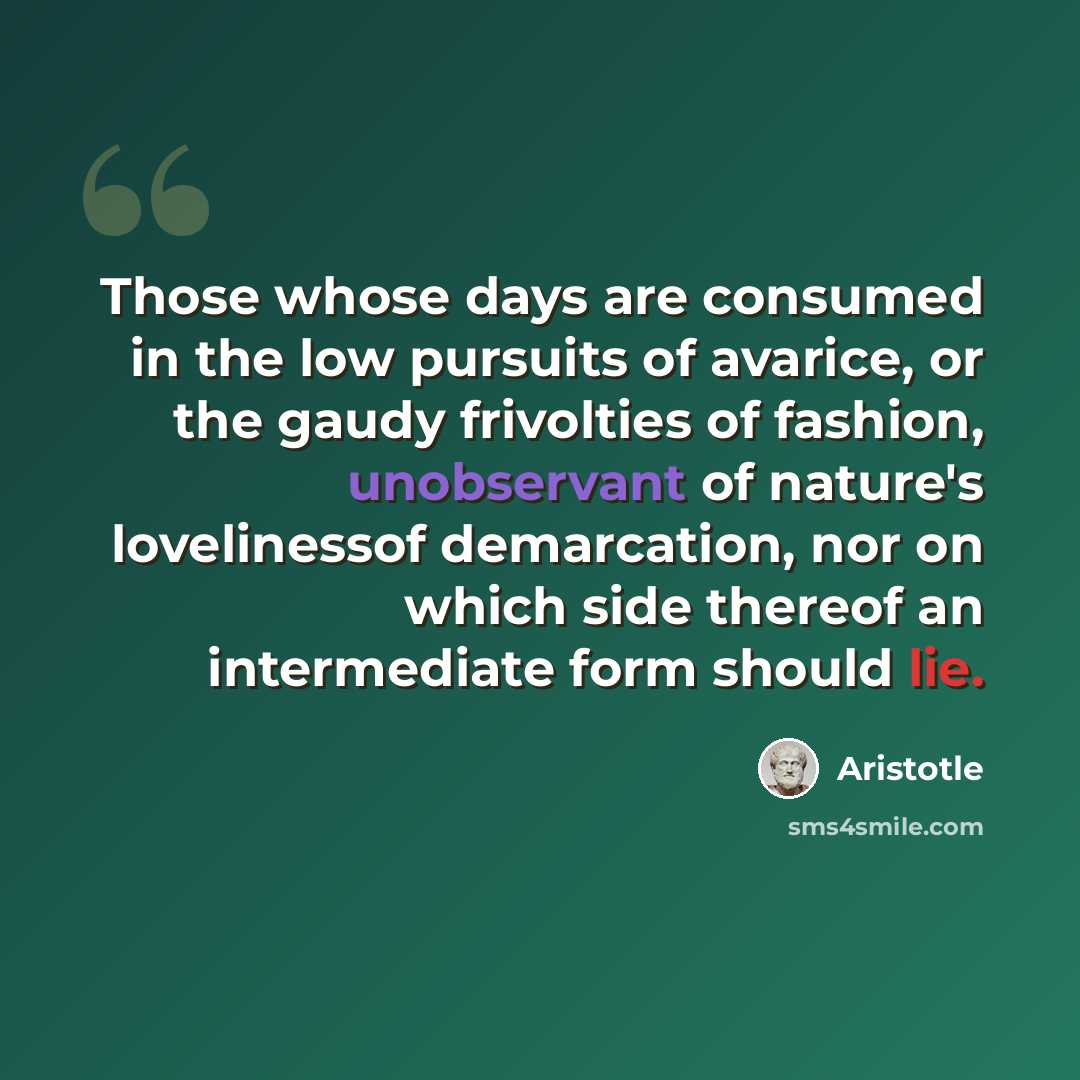
Those whose days are consumed in the low pursuits of avarice, or the gaudy frivolties of fashion, unobservant of nature's lovelinessof demarcation,… — Aristotle Copy Share Image
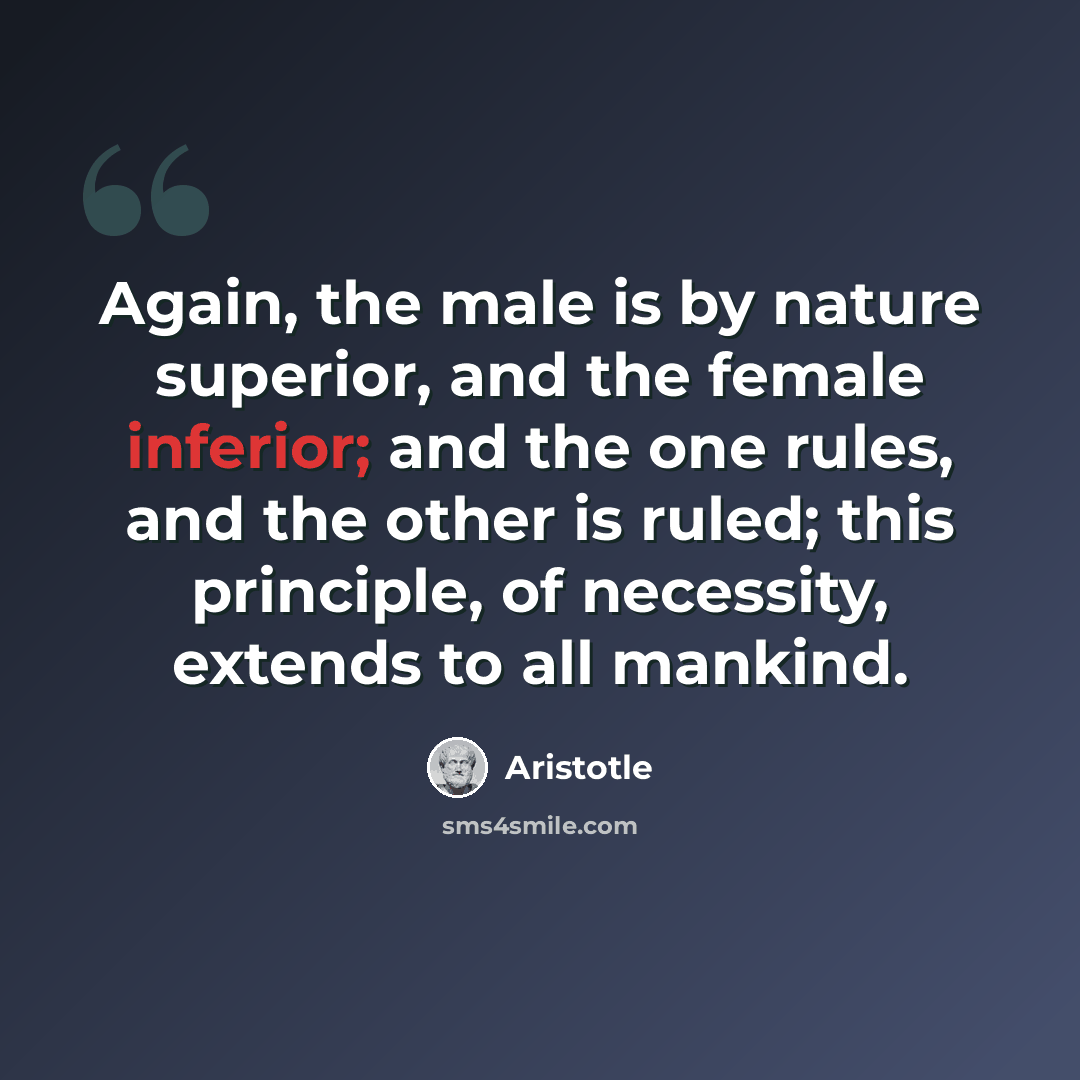
Again, the male is by nature superior, and the female inferior; and the one rules, and the other is ruled; this principle,… — Aristotle Copy Share Image
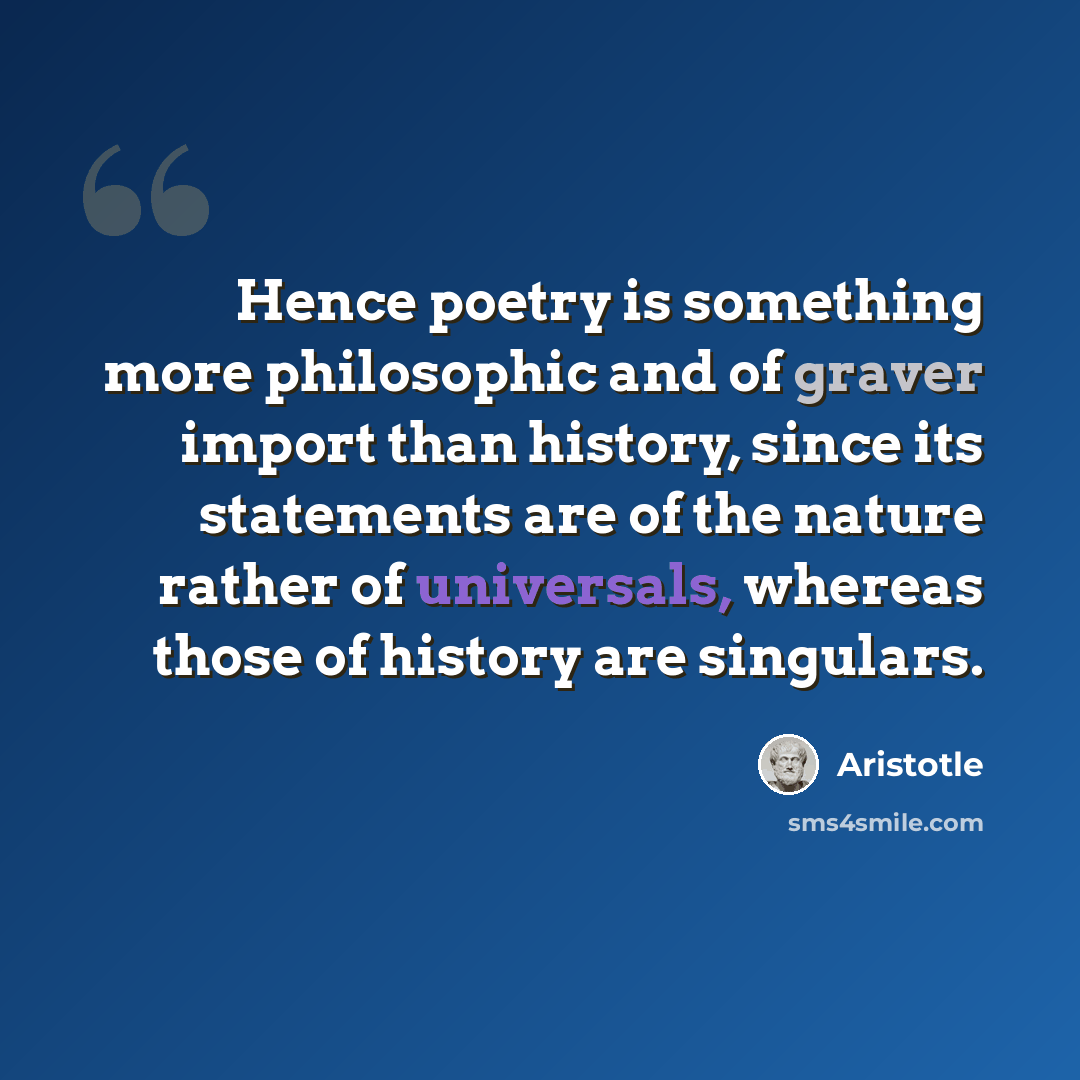
Hence poetry is something more philosophic and of graver import than history, since its statements are of the nature rather of universals,… — Aristotle Copy Share Image
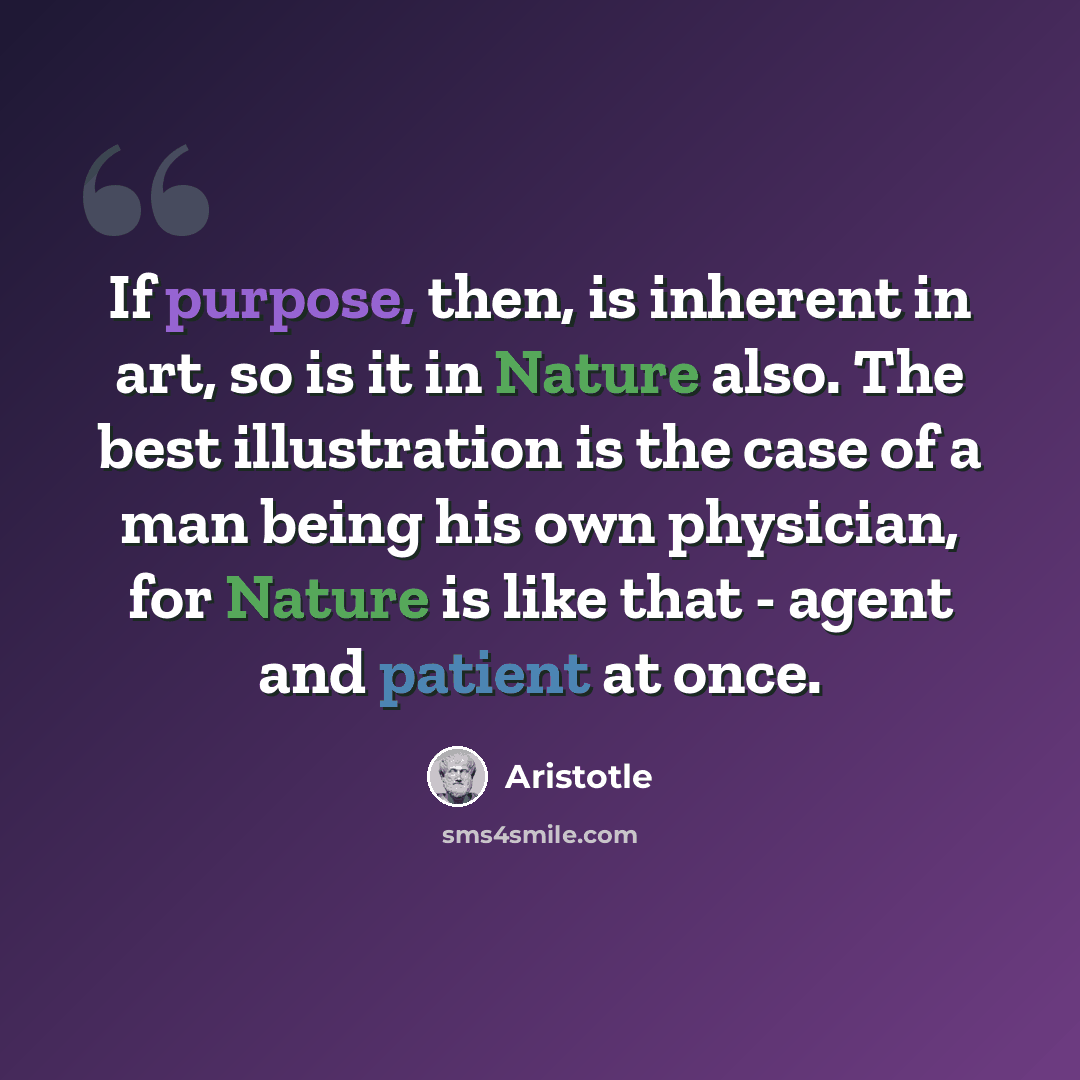
If purpose, then, is inherent in art, so is it in Nature also. The best illustration is the case of a man… — Aristotle Copy Share Image
Of the irrational part of the soul again one division appears to be common to all living things, and of a vegetative… — Aristotle Copy Share Image
Everything that depends on the action of nature is by nature as good as it can be, and similarly everything that depends… — Aristotle Copy Share Image
All men by nature desire to know. An indication of this is the delight we take in our senses; for even apart… — Aristotle Copy Share Image
Nature does nothing without a purpose. In children may be observed the traces and seeds of what will one day be settled… — Aristotle Copy Share Image
The knowledge of the soul admittedly contributes greatly to the advance of truth in general, and, above all, to our understanding of Nature, for… — Aristotle Copy Share
Young men have strong passions and tend to gratify them indiscriminately. Of the bodily desires, it is the sexual by which they are most… — Aristotle Copy Share
The body is at its best between the ages of thirty and thirty-five; the mind is at its best about the age of forty-nine. — Aristotle Copy Share
The ensouled is distinguished from the unsouled by its being alive. Now since being alive is spoken of in many ways, even if only… — Aristotle Copy Share
Although it may be difficult in theory to know what is just and equal, the practical difficulty of inducing those to forbear who can,… — Aristotle Copy Share
The true forms of government, therefore, are those in which the one, or the few, or the many, govern with a view to the… — Aristotle Copy Share
All persons ought to endeavor to follow what is right, and not what is established. — Aristotle Copy Share
Give a man a fish, you feed him for a day. Give a man a poisoned fish, you feed him for the rest of… — Aristotle Copy Share
Obstinate people can be divided into the opinionated, the ignorant, and the boorish. — Aristotle Copy Share
Happiness does not consist in pastimes and amusements but in virtuous activities. — Aristotle Copy Share
To learn is a natural pleasure, not confined to philosophers, but common to all men. — Aristotle Copy Share
![“[Meanness] is more ingrained in man's nature than Prodigality; the mass of mankind are avaricious rather than open-handed.” quote by Aristotle](https://sms4smile.com/q/img-quotes/67e/aristotle-78_human-nature_meanness-is-more-ingrained-in-man-s-natu_518537.png)
![“If then, as we say, good craftsmen look to the mean as they work, and if virtue, like nature, is more accurate and better than any form of art, it will follow that virtue has the quality of hitting the mean. I refer to moral virtue [not intellectual], for this is concerned with emotions and…” quote by Aristotle](https://sms4smile.com/q/img-quotes/796/aristotle-78_accurate_if-then-as-we-say-good-craftsmen-look-to_695282.jpg)

![“The virtues [moral excellence] therefore are engendered in us neither by nature nor yet in violation of nature; nature gives us the capacity to receive them, and this capacity is brought to maturity by habit.” quote by Aristotle](https://sms4smile.com/q/img-quotes/653/aristotle-78_capacity_the-virtues-moral-excellence-therefore-a_1076391.png)