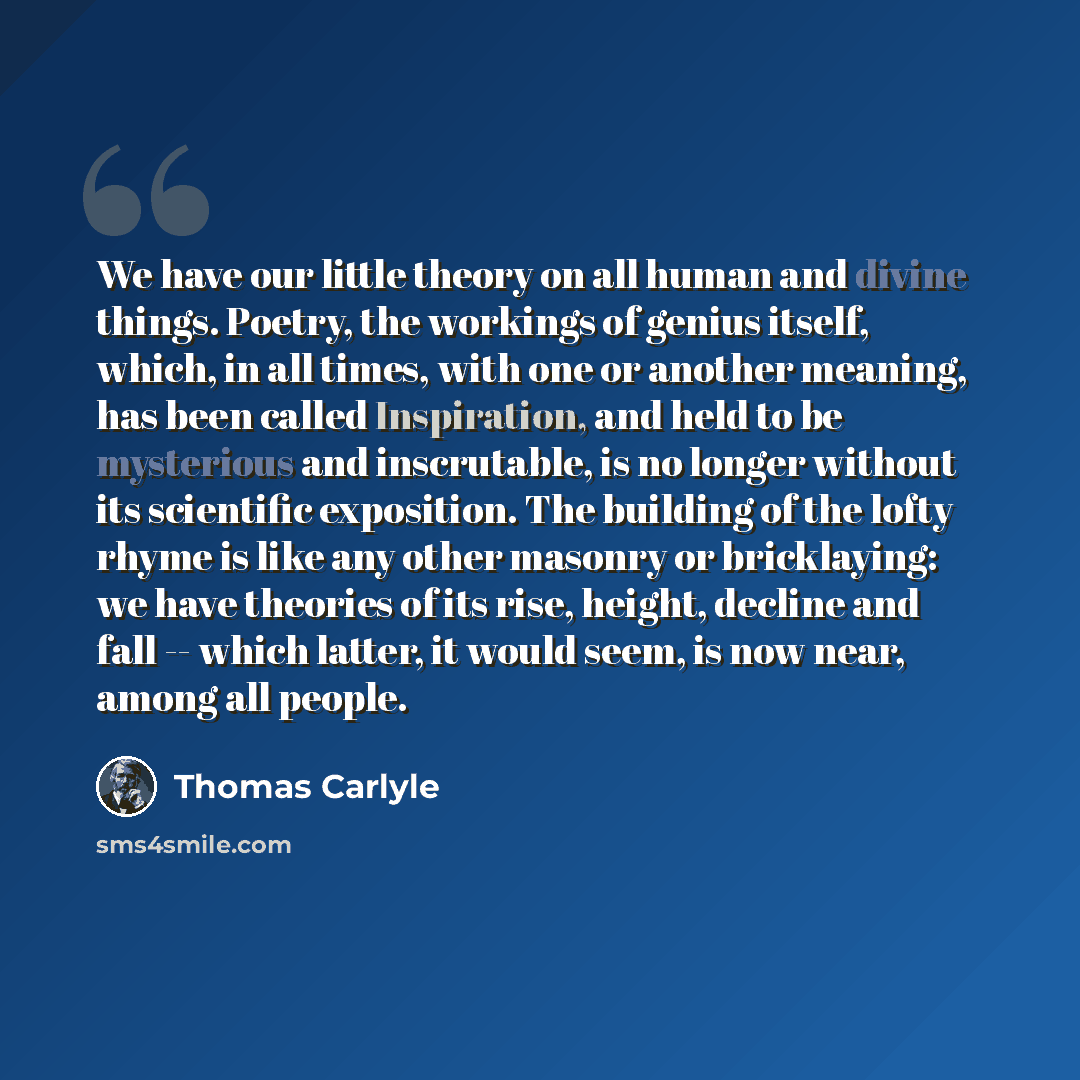
We have our little theory on all human and divine things. Poetry, the workings of genius itself, which, in all times, with… — Thomas Carlyle Copy Share Image
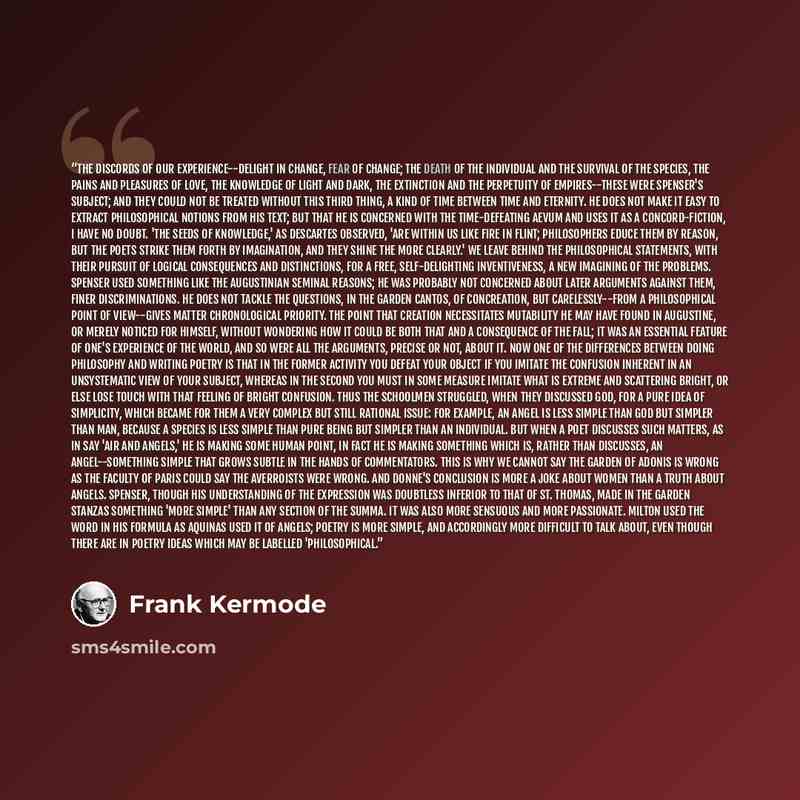
“The discords of our experience--delight in change, fear of change; the death of the individual and the survival of the species, the… — Frank Kermode Copy Share Image
“In the eighteenth century, with the growth of publishing and with the intellectual climate of the Enlightenment, there was a great demand… — Ronald Carter Copy Share Image
“Bohr is really doing what the Stoic allegorists did to close the gap between their world and Homer's, or what St. Augustine… — Frank Kermode Copy Share Image
The techniques are all means of dealing with one simple idea: She wrote it. (That is, the "wrong" person--in this case, female--has… — Joanna Russ Copy Share Image
“One of the first books of travel, giving European readers some insight into the unfamiliar world of the Orient, was published in… — Ronald Carter Copy Share Image
If we are ever to construct a feminist movement that is not based on the premise that men and women are always… — Bell Hooks Copy Share Image
I intend Deaths in Venice to contribute both to literary criticism and to philosophy. But it's not "strict philosophy" in the sense… — Philip Kitcher Copy Share Image
“You sometimes hear people say, with a certain pride in their clerical resistance to the myth, that the nineteenth century really ended… — Frank Kermode Copy Share Image
“The concept of an author, the single creative person who gives the text 'authority', only comes later in this period. Most Old… — Ronald Carter Copy Share Image
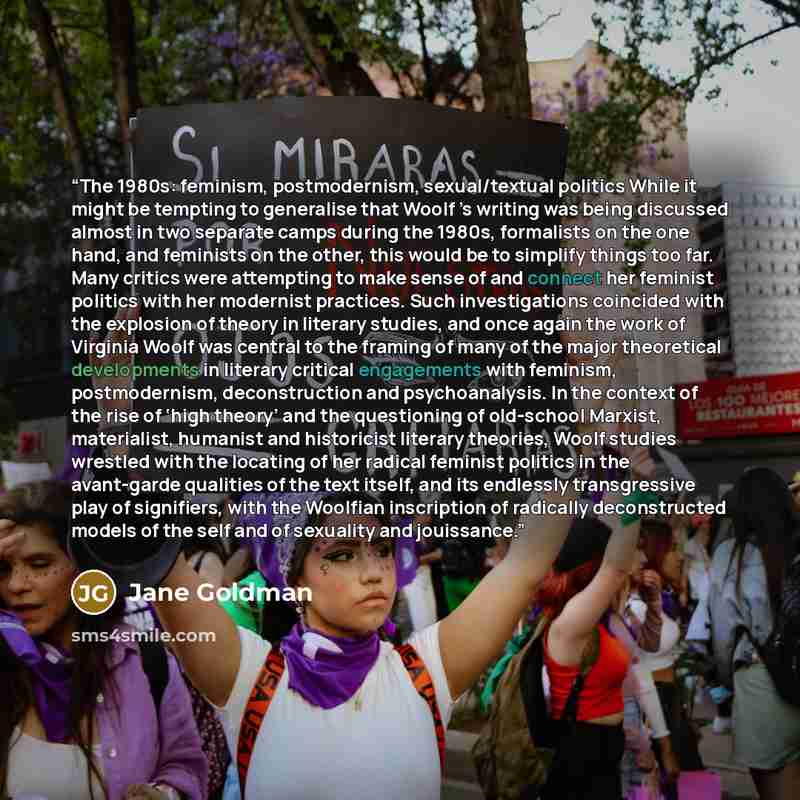
“The 1980s: feminism, postmodernism, sexual/textual politics While it might be tempting to generalise that Woolf ’s writing was being discussed almost in… — Jane Goldman Copy Share Image
“In his Preface to the 1892 edition of Tess of the d’Urbervilles Hardy warns the reader that ‘a novel is an impression,… — Geoffrey Harvey Copy Share Image
“Eliot's understanding of poetic epistemology is a version of Bradley's theory, outlined in our second chapter, that knowing involves immediate, relational, and… — Jewel Spears Brooker Copy Share Image
“Some very eminent critics writing in the decades immediately after the novel's publication felt that Eliot failed to maintain sufficient critical distance… — Rebecca Mead Copy Share Image
“For Aristotle the literary plot was analogous to the plot of the world in that both were eductions from the potency of… — Frank Kermode Copy Share Image
“School of Resentment is a term coined by critic Harold Bloom to describe related schools of literary criticism which have gained prominence… — Harold Bloom Copy Share Image
“Reading The Waste Land, then, is in part reading about reading in the early twentieth century. The crisis in epistemology brought on… — Jewel Spears Brooker Copy Share Image
“If a writer has to find a rhythm if his novel is to come 'right', a rhythm which he may well discover… — Ian Gregor Copy Share Image
“Apocalypse is a part of the modern Absurd. This is testimony to its vitality, a vitality dependent upon its truth to the… — Frank Kermode Copy Share Image
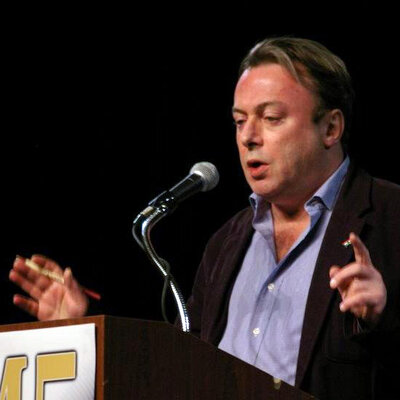
“A few months ago, I was sitting morosely at my desk, wondering why I had ever agreed to review Barbara Bush: A… — Christopher Hitchens Copy Share Image
“Woolf drew on her memories of her holidays in Cornwall for To the Lighthouse, which was conceived in part as an elegy… — Jane Goldman Copy Share Image
“There is a remarkable degree of consistency in the way mediaeval literature affirms humanity. With all its faults, humanity emerges as more… — Ronald Carter Copy Share Image
“When we discuss a novel it is only partially to hear another person's 'view', it is much more to find out what… — Ian Gregor Copy Share Image
“Old English poetry also contained a wide range of conventional poetic diction, many of the words being created to allow alliterative patterns… — Ronald Carter Copy Share Image
“Reading Virginia Woolf will change your life, may even save it. If you want to make sense of modern life, the works… — Jane Goldman Copy Share Image
“Woolf ’s control over the production of her own work is a significant factor in her genesis as a writer. The Hogarth… — Jane Goldman Copy Share Image
“Reading Mrs Gaskell's Life of Charlotte Brontë after Jane Eyre is a curious experience. The subject of the biography is recognisably the… — Ian Gregor Copy Share Image
“Few poets better convey the uneasy transition from Victorianism to Modernism than Thomas Hardy. His novels, written between 1870 and 1895, made… — Ronald Carter Copy Share Image
“t this point I would like to return to the question of the plot movement and the different narrative levels of the… — Ian Gregor Copy Share Image
“Gower is the first English writer to use "history" as an English word. He regularly rhymes the term with "memory," for to… — Russell A. Peck Copy Share Image
“Whether he chooses a 'scholarly' or a 'popular' edition the modern reader is likely to have his judgement influenced in advance. Almost… — Ian Gregor Copy Share Image
“Novels begin and end with, consist of, and indeed in one sense are nothing but voices. So reading is learning to listen… — Ian Gregor Copy Share Image
“As we have seen, French culture and language interacted with native English culture for several generations after the Norman Conquest. A common… — Ronald Carter Copy Share Image
“Old English poetry is characterised by a number of poetic tropes which enable a writer to describe things indirectly and which require… — Ronald Carter Copy Share Image
“Recognising such dimensions implicit to the reading experience can distract from the immediacy of our response; it can substitute literary archaeology for… — Ian Gregor Copy Share Image
“At some very low level, we all share certain fictions about time, and they testify to the continuity of what is called… — Frank Kermode Copy Share Image
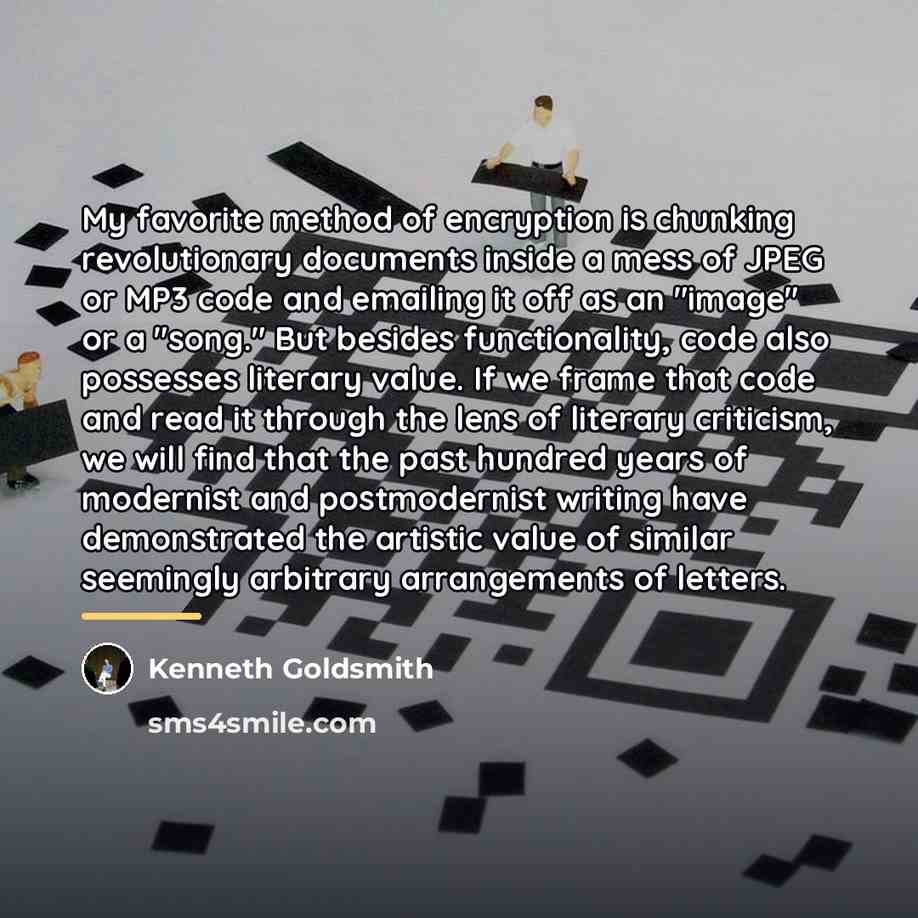
My favorite method of encryption is chunking revolutionary documents inside a mess of JPEG or MP3 code and emailing it off as… — Kenneth Goldsmith Copy Share Image
“Too often critics have taken as the sole and crucial matter of fantasy the preoccupation of Tolkien, the quest for a remedy… — Roz Kaveney Copy Share Image
“IT is worth remembering that the rise of what we call literary fiction happened at a time when the revealed, authenticated account… — Frank Kermode Copy Share Image
“The Romantic journey was usually a solitary one. Although the Romantic poets were closely connected with one another, and some collaborated in… — Ronald Carter Copy Share Image


![“School of Resentment is a term coined by critic Harold Bloom to describe related schools of literary criticism which have gained prominence in academia since the 1970s and which Bloom contends are preoccupied with political and social activism at the expense of aesthetic values.[1] Broadly, Bloom…” quote by Harold Bloom](https://sms4smile.com/q/img-quotes/a47/harold-bloom-3350_african-american_school-of-resentment-is-a-term-coined-by_2033701.jpg)